

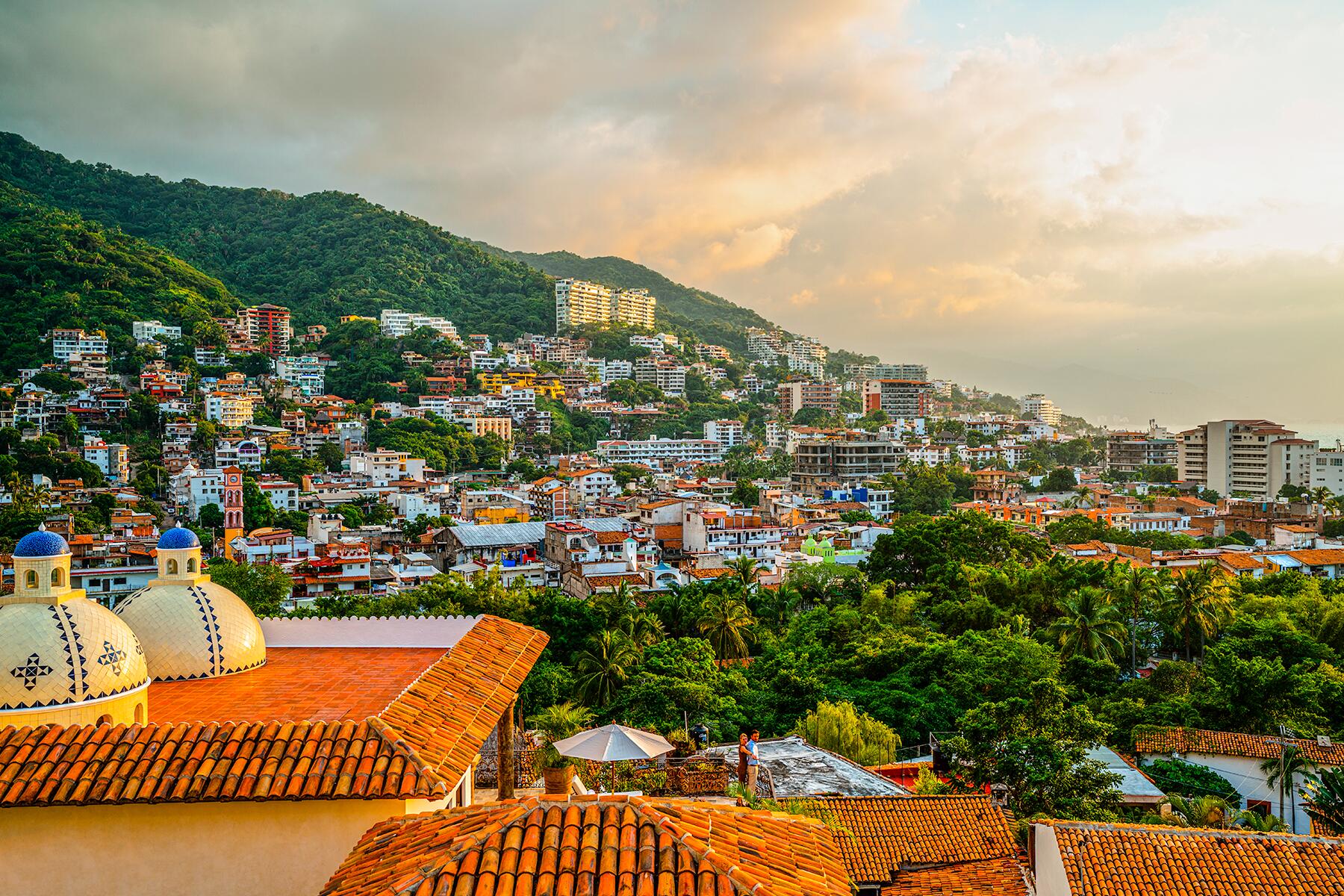
After cartel violence, State Department warnings, and flight cancellations, is it safe to visit?
Puerto Vallarta experienced an immediate cessation of tourist arrivals on Feb. 22, when cartel violence rocked the city and several other communities in Jalisco State and other areas of Mexico. The violence subsided quickly, and the U.S. Embassy in Mexico noted that the embassy and all consular offices across the country had resumed normal operations by Feb. 25. The embassy also highlighted that flight schedules had returned to normal and road closures throughout the country had been cleared.
Juanita Gutierrez, general manager at the Puerto Vallarta boutique hotel Casa Kimberly, said that the hotel received many calls from booked guests in the days after Feb. 22, and some of those guests did cancel their reservations. “However, our guest base is very loyal and very well-traveled so we have retained the majority of our bookings, I’m happy to say,” she told Fodor’s.
On Feb. 22, cartel members set cars on fire and blocked roads while clashing with security forces. In Puerto Vallarta, there were reports of army helicopters and troop transports patrolling the city after several vehicles and convenience stores were set on fire by cartel members. Much of the disturbance was in the city’s Romantic Zone, an area popular with U.S. and Canadian visitors. It was later revealed that some of the social posts purporting to document the violence in the city were false, although many of the events were independently verified and U.S. consular officials warned against travel to the city.
Continue Reading Article After Our Video
Recommended Fodor’s Video
Most major cruise lines suspended their planned port calls at Puerto Vallarta on Feb. 22, but some have returned, and most will be back by the middle of March. Norwegian Bliss returned to Puerto Vallarta on Mar. 4, while Princess Cruises ships are expected to return to the city by mid-month. Some cruise lines had rerouted ships to other ports, like Mazatlán, or extended sea days instead of calling at Puerto Vallarta.
The city has returned to normal and is ready for visitors, notes Gutierrez. “I would say at this point there is no more cause for concern than before the incidents. People have resumed life as normal; businesses are fully operational—[it’s] peaceful. Our guests have been out and about, enjoying the town.”

Casa Kimberly itself has a storied past. When Richard Burton was filming Night of the Iguana in Puerto Vallarta in the 1960s, he bought Elizabeth Taylor the house across the street from his and built a skybridge between them so they could visit each other without having to cross the street full of paparazzi, who were aware of the scandalous affair (both Burton and Taylor were married to other people at the time). Taylor continued to visit the home long after her two marriages to Burton ended. She sold the home in the 1990s and it converted to its current use as a boutique hotel and popular local eatery, The Iguana Restaurant & Tequila Bar.
Since the 1960s, tourism activity in the region has spread far beyond the Romantic Zone. Puerto Vallarta itself has several resort areas, spreading up the beaches north and south of the city and into the neighboring state of Nayarit, where the resort communities of Punta Mita and Sayulita are also popular with tourists.
Flights at the city’s Licenciado Gustavo Díaz Ordaz International Airport, suspended during the violence (including some flights that turned back to the U.S. or Canada midflight) have resumed. Although the city is largely back to normal, passenger demand appears soft, and some airlines, including Alaska and Delta, have reduced capacity into the city in the upcoming months by suspending previously scheduled flights.
When asked if visitors should be hesitant about returning, Gutierrez offers some advice: “Certainly visitors should employ the same caution they would in any foreign country but Puerto Vallarta is the same friendly, warm, and welcoming city it has always been.”
