

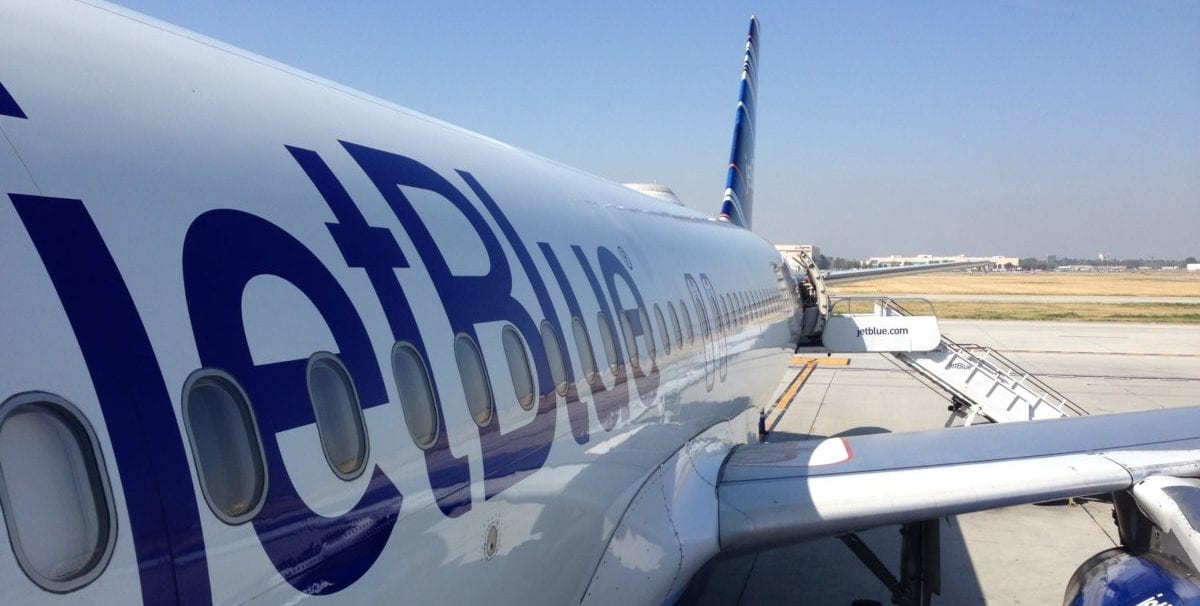
I will never forgive JetBlue for this screwup.
We’ve spent the better part of a decade trying to convince travelers that airlines are not, in fact, tracking your searches and raising prices accordingly.
“That’s not how their pricing systems work” we say.
“If airlines were tracking searches, we’d never find deals … and we find plenty,” we repeat.
“Don’t bother clearing your cookies or searching incognito!” we plead.
At a certain point, I have to accept that I’ll go to my grave fighting this battle. And JetBlue just put a nail in the coffin.
This story originally appeared in our free daily newsletter, The Extra Mile – sign up now to get stories you won’t see here, exclusive deals, and more in your inbox every weekday!
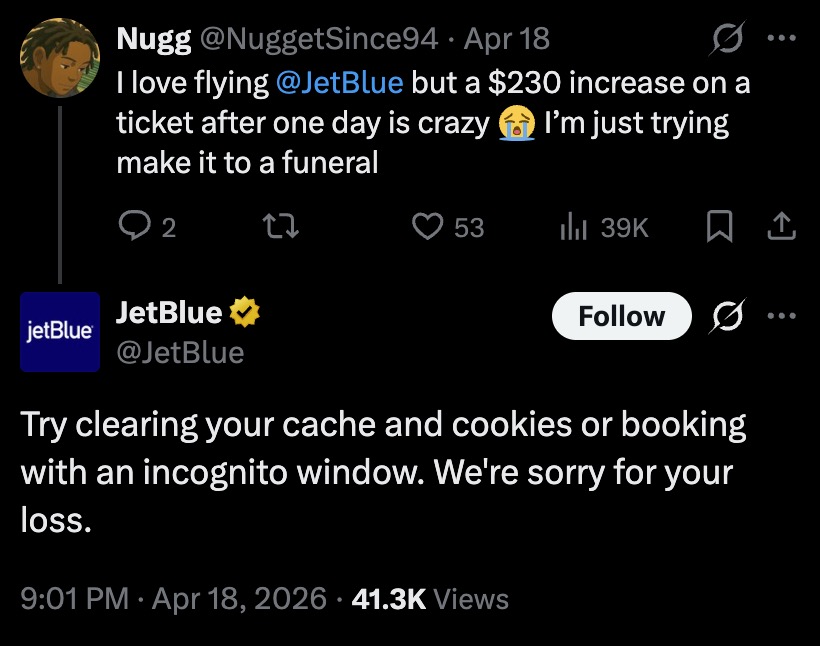
Somebody on the JetBlue social media team is definitely getting fired for that.
Cue the viral backlash. Even U.S. senators are pouncing on it as evidence of “surveillance pricing.”
It furthers millions of Americans’ worst suspicions about airlines. And as a charter member of the “Airlines Get Away With Way Too Much And Should Be Held Accountable Club,” part of me is here for it.
There’s just one problem: It’s not true.
Look, I get it. We all have stories about seeing a flight for $250 and checking back later to see prices have shot up by $50 or more. What other explanation could there be?!
It’s not that airlines saw you searched and decided to charge you more. It’s that somebody else just bought that $250 fare you were eyeing while you waited.
The reality is that flight pricing is frustratingly complex, constantly changing, and yet also woefully antiquated.
The system of fare buckets that airlines use to sell and distribute tickets – with two dozen fare classes, each with different rules, restrictions, and prices – just can’t support raising prices in real time based upon your previous search. Or your purchase history. Or whatever.
Don’t get me wrong: Airlines absolutely want to. That whole dustup last summer about Delta’s expanding use of AI to set fares proved as much.
But that’s not what’s happening today. So it’s not that a JetBlue employee fessed up to what countless Americans already believe – it’s just another instance of a frontline airline employee offering bad intel. Add it to the pile.
The problem isn’t just that it’s wrong. The real problem is that travelers latch onto such a seemingly simple explanation and “hacks” like using a VPN or clearing your cookies instead of focusing on what really matters to help you find a cheaper fare:
- being flexible with your travel dates – and, ideally, following The Flight First Rule
- Using tools like Google Flights to find those savings
- Ditching blind loyalty to one carrier and being an airline free agent
We’ve spent countless hours writing and podcasting about this. Clearly, the work is never done.
Sign up for our free daily newsletter, The Extra Mile, for more stories you won’t see here, exclusive deals, and more in your inbox every weekday!

What Savvy Travelers Read Every Morning
Get the Extra Mile newsletter for the latest travel news, points & miles strategies, and everything you need to know to travel smarter and spend less.
