

Could this be history’s first recorded LGBTQ+ couple?
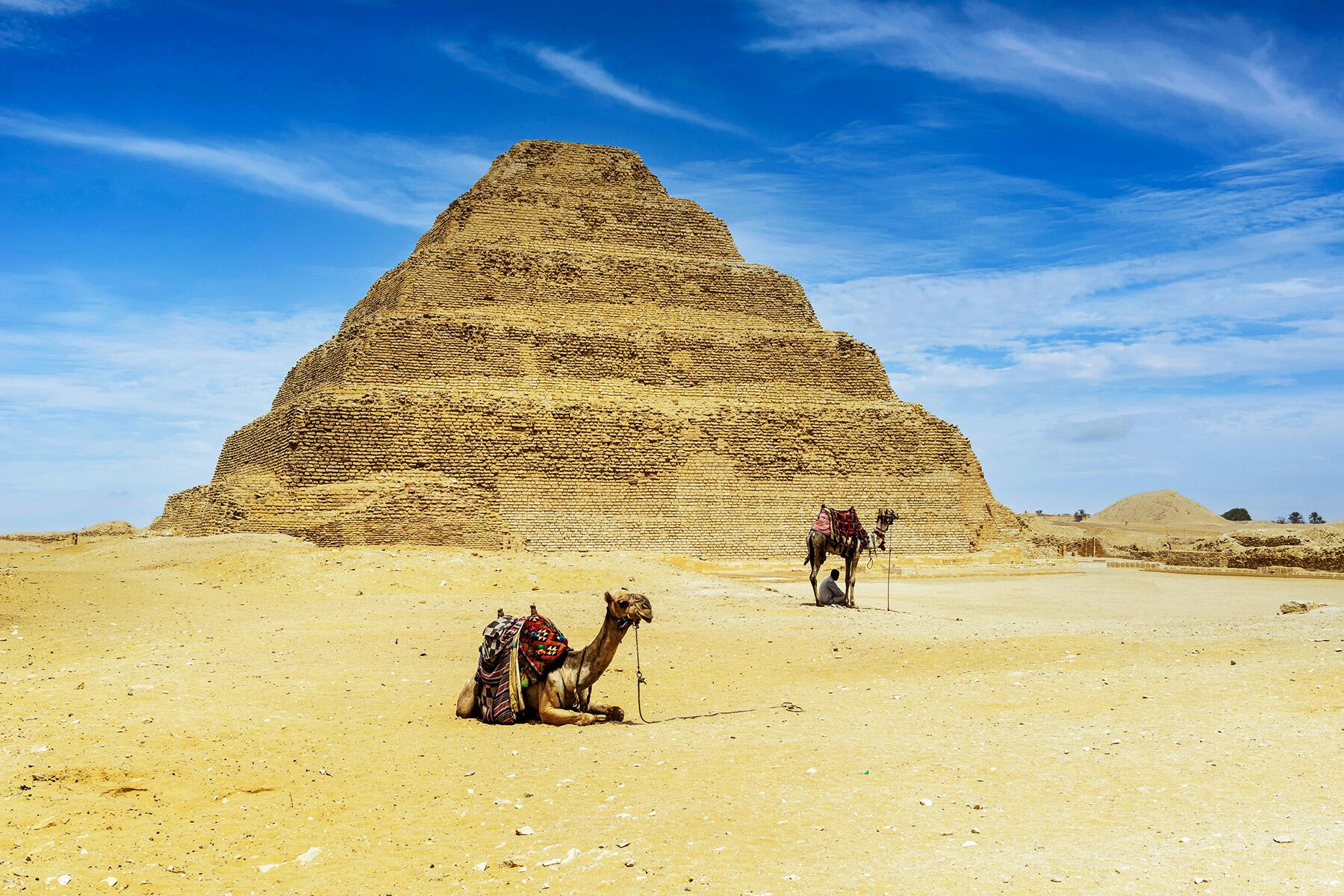
Just 20 miles south of Cairo, in the vast necropolis of Saqqara, the desert opens into one of Egypt’s most extraordinary archaeological landscapes. Saqqara stretches across miles of sand and stone, home to pyramids, temples, and tombs that chart the evolution of ancient Egyptian civilization. Most visitors come for its monumental highlights, particularly the Step Pyramid of Djoser, widely considered the world’s earliest large-scale stone pyramid.
But tucked among these grand structures is a far more intimate story, one that unfolds not on the skyline but within the walls of a single tomb. It belongs to two men.
Khnumhotep and Niankhkhnum lived during Egypt’s Fifth Dynasty, around 2400 BC, at a time when the Old Kingdom was at its height. Both held the title often translated as “Overseer of the Manicurists of the Palace,” a role that placed them within the royal household and in close proximity to the king. In ancient Egypt, such access signaled a high degree of trust, as those permitted to physically attend to the pharaoh occupied a privileged and carefully controlled position.
Their shared tomb was discovered in 1964 by Egyptian archaeologist Ahmed Moussa. Today, it is recognized as one of the larger and more elaborately decorated non-royal tombs at Saqqara. At first glance, it appears consistent with others in the necropolis. Its walls are filled with scenes of daily life: banquets, offerings, agricultural work, and family gatherings, all intended to sustain the deceased in the afterlife.
Continue Reading Article After Our Video
Recommended Fodor’s Video
In the Old Kingdom, tomb decoration followed a highly structured visual language in which scale, placement, and gesture were carefully controlled. Figures were not arranged randomly; they were composed to reflect hierarchy, identity, and relationships. The tomb owner typically appears larger than the surrounding figures, reinforcing status, while family members are positioned to signal lineage and closeness. Within this system, repeated proximity carries meaning. When two figures appear consistently side by side, sharing central space across multiple scenes, it reflects a deliberate choice about how they were to be remembered. This makes the pairing of Khnumhotep and Niankhkhnum particularly striking. Not only because they appear together, but because they do so with a visual emphasis that suggests parity and connection.
But as you move through the space, something becomes clear. Khnumhotep and Niankhkhnum are consistently depicted together. They appear side by side in scene after scene, their bodies aligned, their gestures closely mirrored. In one of the most striking reliefs, the two men stand nose to nose, their faces nearly touching. In another, they are shown embracing. In the visual language of ancient Egyptian art, such poses are widely understood to signal intimacy and closeness, and are frequently seen in depictions of spouses. It is this imagery that has made the tomb particularly compelling as well as the subject of ongoing debate.


Sara Sioufi
Some scholars have interpreted Khnumhotep and Niankhkhnum as a romantic couple, sometimes described as one of the earliest possible same-sex pairings represented in the historical record. Others urge caution, suggesting they may have been brothers, perhaps even twins, or that their closeness reflects a different kind of familial or social bond, shaped by cultural conventions not fully understood today. No definitive explanation has been universally accepted.
The tomb itself adds to this ambiguity. Shared burials in ancient Egypt were not uncommon, but they were often associated with family groups or married couples. For two men of comparable status to share a tomb in this way remains unusual, and it suggests that their relationship, whatever its nature, was considered significant.
Additional details in the artwork have also prompted discussion. Both men are shown with wives and children in certain scenes, in keeping with elite Old Kingdom tomb conventions. However, in some reliefs, Niankhkhnum’s wife appears less prominently than might be expected, while Khnumhotep is positioned in ways that some scholars have noted resemble spousal placement. These elements are open to interpretation, but they reinforce the centrality of the relationship between the two men within the tomb’s visual program.

For visitors, these subtleties are part of what makes the tomb so memorable. Unlike the towering pyramids nearby, this space invites close attention. The carvings are detailed and deliberate, and their meaning unfolds gradually. As your eyes adjust to the dim light, figures emerge from the limestone: servants at work, musicians at banquets, family members gathered in carefully structured scenes. And throughout, Khnumhotep and Niankhkhnum remain at the center.
Saqqara can feel vast, especially under the midday sun. But stepping into this tomb creates a sense of enclosure and stillness. The scale narrows from monumental to human. The desert quiet settles, and the focus turns inward. In that quiet, the tomb feels less like a display of status and more like a record of connection.
It also reflects the ways in which history is interpreted over time. Since its discovery, the tomb of Khnumhotep and Niankhkhnum has been interpreted in different ways, sometimes emphasizing familial explanations, at other times acknowledging the possibility of a more intimate bond. These shifts often mirror broader cultural attitudes toward how relationships in the ancient world are understood and discussed.
Egyptologists today tend to approach the tomb with measured caution. Ancient Egyptian society operated within its own frameworks of identity, kinship, and representation, and modern categories do not always map neatly onto the past. As a result, many scholars emphasize the importance of acknowledging uncertainty while still engaging with the visual and archaeological evidence. For travelers, this ambiguity is part of the experience.
Rather than presenting a fixed narrative, the tomb invites closer looking and personal interpretation. It encourages visitors to consider not only what is depicted but also how and why it was chosen for preservation. Visiting Saqqara is often framed as a journey through the origins of monumental architecture and religious belief. But encounters like this shift that perspective. They bring attention back to individuals, to relationships, and to the quieter aspects of life that rarely dominate historical narratives.
Khnumhotep and Niankhkhnum were not kings, yet the tomb they share is remarkably sophisticated, reflecting both their status and the approval required to construct such a monument. Its scale and decoration suggest that their lives—and their connection—were considered worthy of lasting commemoration.
For travelers, Saqqara is typically visited as a half-day trip from central Cairo, often combined with nearby sites such as Dahshur or Memphis. The necropolis is expansive, and hiring a guide can make a significant difference in navigating its lesser-known tombs, including that of Khnumhotep and Niankhkhnum, which is not always included on standard itineraries. Early morning or late afternoon visits offer more manageable temperatures, especially in the summer months, and allow more time to explore the site at a slower pace.
For those exploring Saqqara today, the tomb offers something distinct from the site’s more famous landmarks. It provides a more personal point of entry into the ancient world, one grounded not in grandeur, but in human connection. Whatever the precise nature of their relationship, it was clearly meaningful.
