

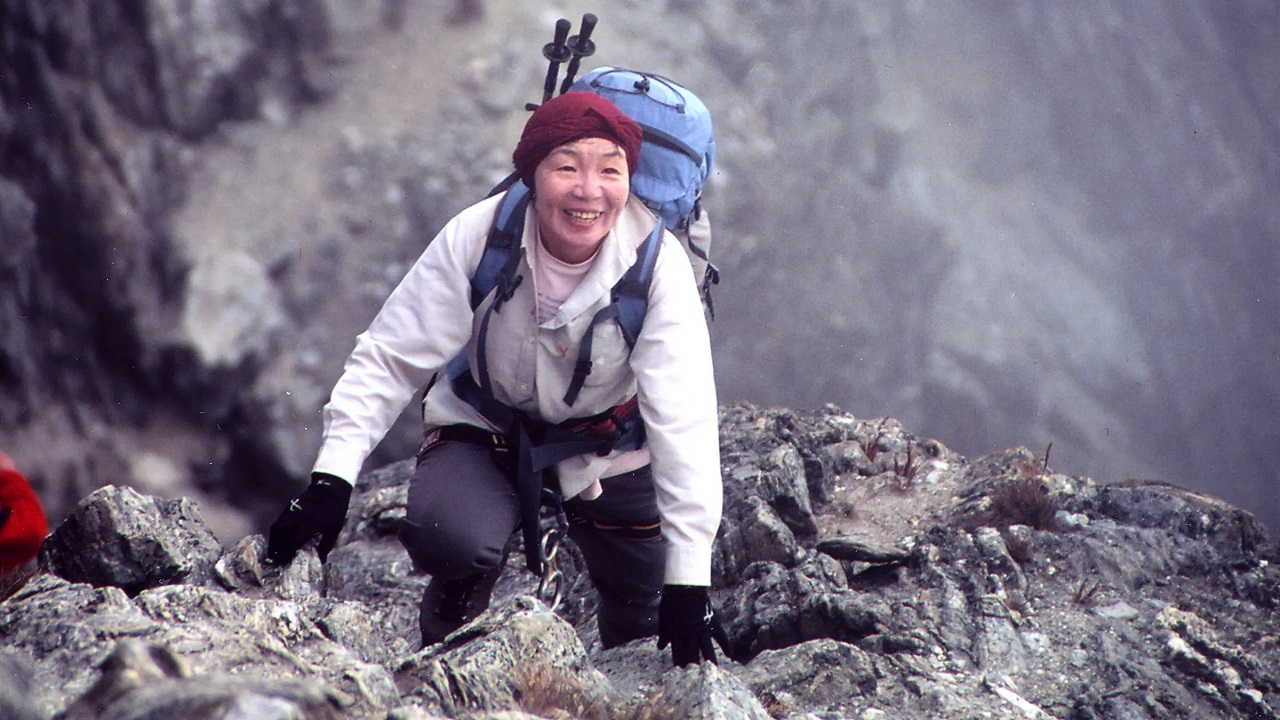
The original fast-and-light mindset lived in climbers like Junko Tabei. But it was her gritty courage that took her to the top.
“First, silence. Then a whole-body vibration, a deafening noise and – WHAM – impact. Avalanche! Before I knew it, I was tumbling fast.” (Junko Tabei, Honouring High Places)
You’re face-to-face with your climbing partner, trying to think clearly, trying to work out whether you can save yourself, save the team, save anyone. But all that comes out is: “Everyone alive?” Your teammate’s breath is on your face: “I’m suffering”, she whispers. Then it lands: neither of you can move. Voices erupt and suddenly, mercifully, hands are on you. Then ice axes. Digging. Fast. Bodies are being pulled out one by one. You mutter something in Japanese. The Sherpa rescuing you probably doesn’t understand the words, but somehow he gets your meaning. “All members safe,” he replies in English. You’re carried into a Sherpa tent. Voices shout instructions over each other in the brutal -20°C weather outside. Who’s in the worst shape? Who needs aid? And then you realize — that person is you.
This was the first all-women team to climb Everest. 15 Japanese mountaineers, five years of meticulous planning, saving, and giving every last ounce of time and energy they had — smashed by an avalanche as they slept at camp 2. Because she was the farthest from the avalanche when it hit, climbing leader Junko Tabei ended up at the bottom of a pile of tents, equipment, and human bodies. The campsite was wreckage, but by some miracle it was true. Everyone was alive.
1975 — the year Junko’s team embarked on Everest — was a time of political and technological growth in Japan. And yet, only 30 years since the vote for women had passed, gender roles were still sorely apparent. Long before the outdoor industry made technical systems a sales pitch, Junko Tabei was building her own path to the highest places on earth by simply not taking no for an answer. She knew that climbing wasn’t a sport that cares if you’re a man or a woman. Not when you’re up there on the mountain. “What elated me most [about climbing] was the fact that if I kept walking, no matter how fast, or slow, I would arrive at a place I had never been before.”
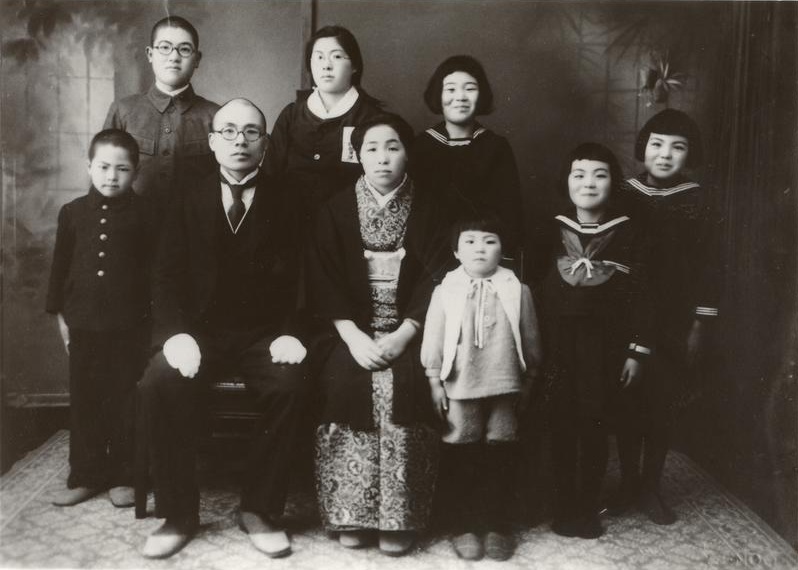
Born in the Fukushima area Miharu in 1939, Tabei loved their small Japanese hometown that came alive with colour in springtime. Her family ran a humble printing business and her childhood was a playground of rope swings on blossoming hillside trees, running around near the trailhead of Fudo-Yama mountain. One of seven children and the youngest girl, she was considered a small and weak child, never growing beyond the adult height of five feet. Because of this, she ventured toward music as a kid, considering the possibility of becoming a singer. But a school trip and hike up Nasudake peak in Nikko National Park changed Tabei’s path forever: the view from the top and the nature that sprawled before her was a feeling she wanted to keep.
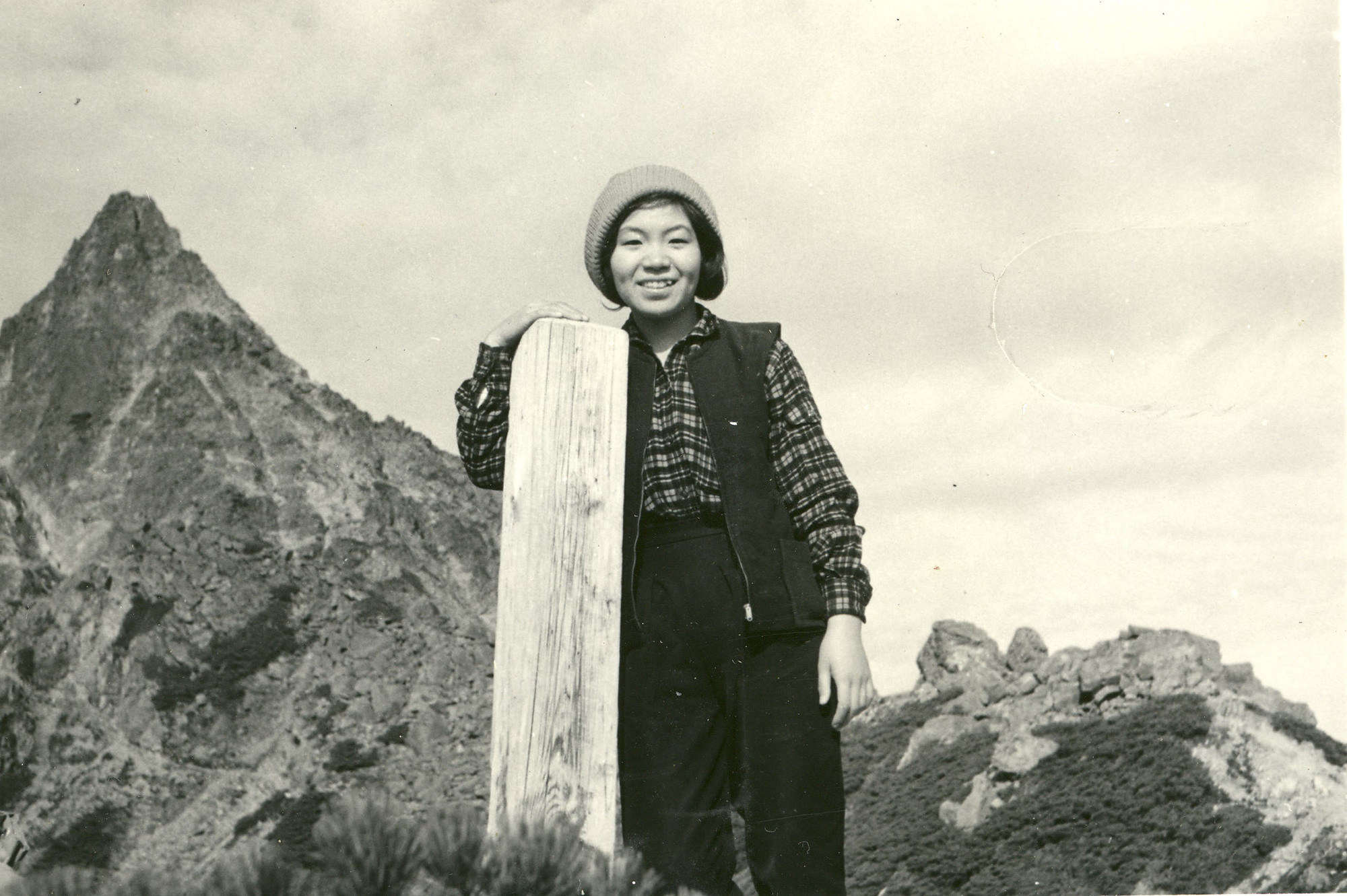
University in Tokyo in the late 50s saw Tabei shack up in a girls-only dorm hosting six to a room. Notoriously strict on visitors, bedtime, speaking, and eating, Tabei later attributed this level of discipline to helping her on the mountains, yet at the time it made her depressed and withdrawn. After the death of her sister to leukemia, and the early death of her father to a work accident, Tabei developed a thick skin and rebellious nature, redeemed only by hiking through forest mountains near Miharu and Tokyo. Her father had always encouraged her to care about her health. “Hiking is good for you,” he would tell her. She stayed at school but spent her weekends climbing in nature and letting thoughts of her father drift through her mind.
Tabei beat 200 applicants to earn a job straight out of university as an editor with academic giant The Physical Society of Japan. She was treated like an equal and happily accepted pay that covered rent and food, scrounging any leftover funds to acquire a pair of second-hand overboots that made her feel ‘like a real mountaineer’. She joined local climbing groups with male counterparts, ignoring the rumour mill and eventually becoming comfortable sleeping alongside men in tents. She learned language like ‘piton’ and ‘carabiner’ and began to understand there were different ways up a mountain. That you could challenge yourself with more difficult faces.
For years, she climbed with different groups, each a stepping stone to tougher climbs and different conditions. Fellow climber Yoko-o-san taught her how to move her body correctly. Lean out. Use your feet. Finally, he assured her she was ready to lead, and in 1969 Tabei started the Women’s Mountaineering Club Joshi-Tohan. In their lead-up to Everest, their team had snatched time away from their families wherever they could get it, applied for grants and funding, and when their allowances fell short (and they always fell short), they improvised. They created gear from anything that could lower costs – waterproof car covers became outer layers of gloves, sleeping bags were hand-sewn, and pants were put together from old house curtains. At a time when technical outdoor gear was just beginning (GORE-TEX didn’t hit the market until 1976), Tabei and her teammates weren’t just making gear because they had limited resources. They were making gear because it didn’t exist yet. You want to survive in the wild? You better make sure you’re ready.
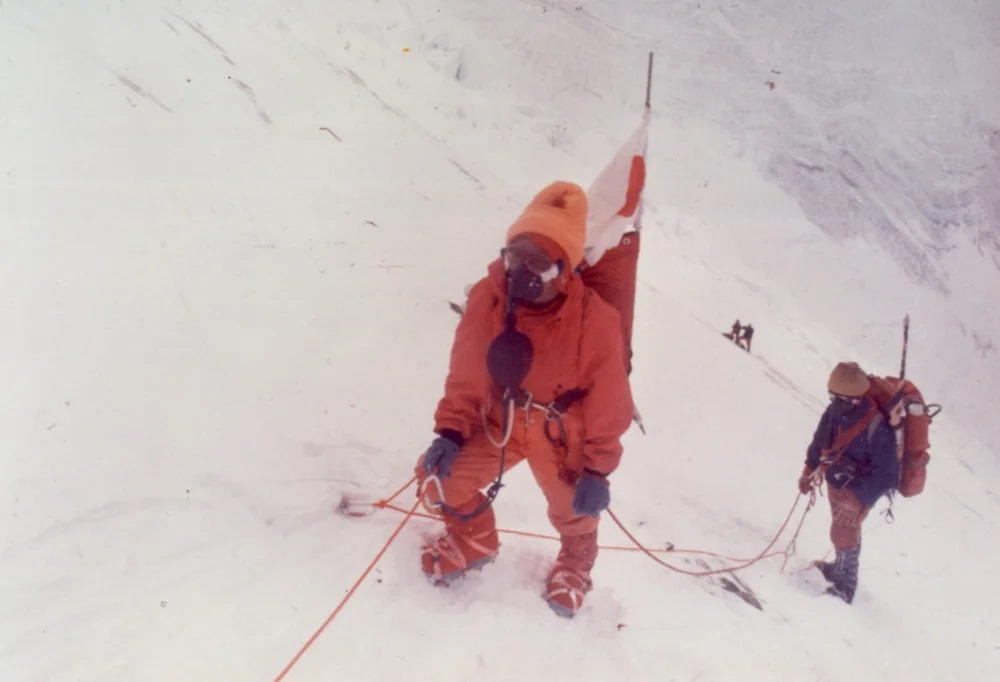
That ill-fated day at base camp 2 on Everest, a team of Sherpas had by luck seen the avalanche coming and without so much as pulling on their shoes, had run to the aid of the women. Food and equipment were strewn and buried, ruined in the destruction. Radioing with their comrades below, doctors and team members advised Junko to retreat to base camp immediately. “The most badly injured is Tabei-san. She appears to have no broken bones but her contusions are critical and she needs to be helicoptered down.” Still in shock, Tabei frantically wondered how this was possible. Her answer? Not a chance. She yelled to anyone that would listen: “I won’t go down! Don’t call a helicopter!” Against doctor’s orders, she refused to give up on the mission, and once she’d put her foot down, every team member around her agreed: “If Junko stays, we stay.”
It took days to recover what they could of the supplies. Meanwhile, Tabei was carried between safer resting camps, unable to walk on her own. But by day five she was strong enough to meet her team leader and discuss the possibility of continuing. After almost a week of precious lost time, they got the green light. The climb would continue. Pushed to the brink of exhaustion from living so long above 5000 meters, the team were running on fumes. Huddled together, they waited nervously as the summit crew was announced. Tabei let out a breath. She would be among the few to climb to the top.
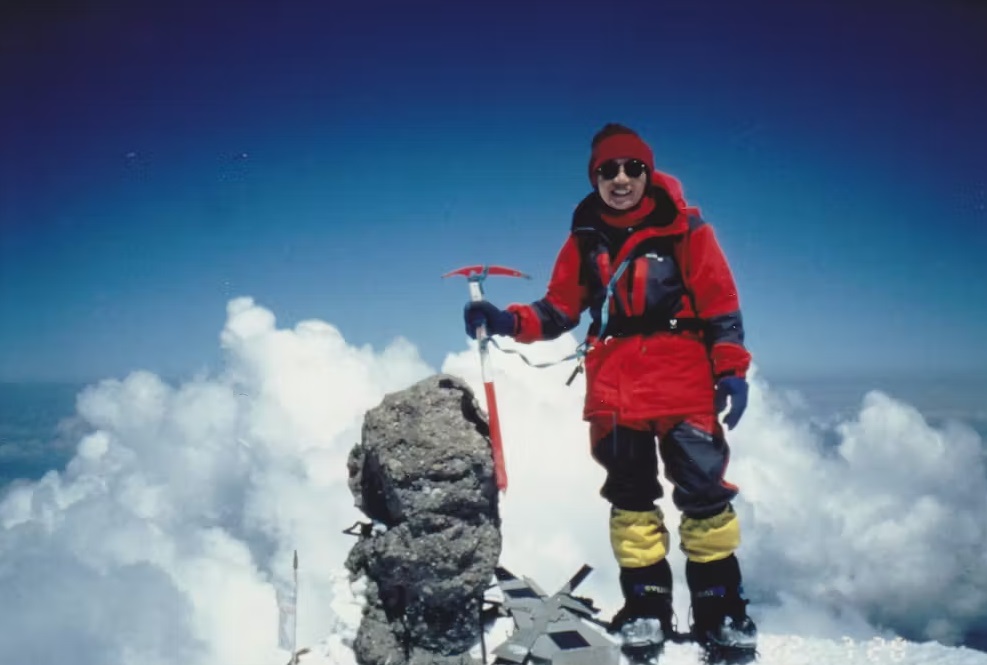
As the team pushed higher and people peeled off with altitude sickness and fatigue, it became clear only enough supplies remained for one person to ascend to the peak. Tabei looked at her teammate Watanabe – a mother from Kawagoe, just like herself. “Let Watanaba-san climb”, she said. Watanabe took the radio. “Tabei-san has better experience at high altitudes. Reaching the summit is more certain with her climbing.” It was decided. Tabei would be the one to climb the summit. She would conquer the savage peak of Everest, her legs so tired she — in her own words — dragged herself to the top. But finally, at 12.30pm on May 16 1975, Junko Tabei became the first woman to conquer Mount Everest. Or as she preferred – the 36th person. “It was surreal to be at such a high altitude, knowing there was no room for mistakes. A fall would mean death. My hair stood on end beneath my helmet, my scalp shook, and goose bumps crawled up my back.” That same week another climber, Pan Duo, was making her way up the Tibetan side of Everest with a Chinese team. She would scale the summit just 11 days later and become the second woman to reach Everest’s peak.
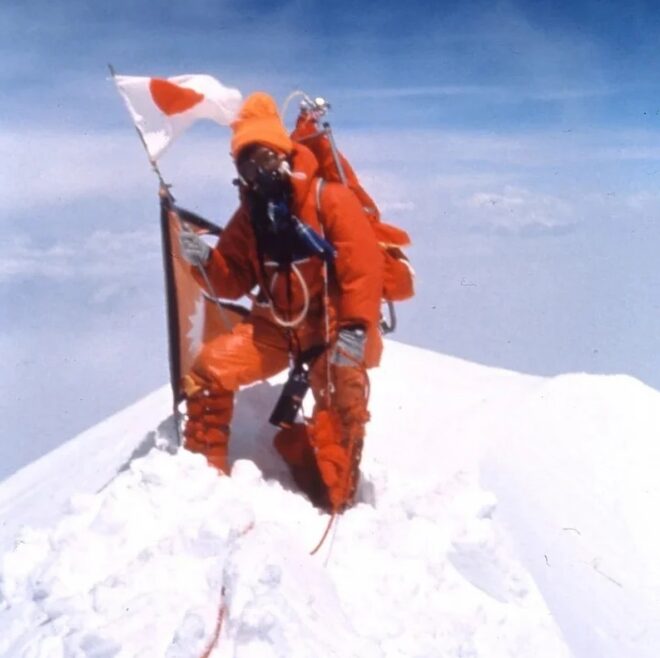
When Tabei returned to Japan the homecoming parties lined the streets, thousands of people cheering for her at Tokyo airport. It started a flurry of media and Tabei later met Duo on a press tour, the pair becoming lifelong friends. What intrigued Tabei on that tour wasn’t just the feat, but the why of the other women. Duo’s reason for climbing was “For the Republic of China”. Polish mountaineer Wanda Rutkiewicz’s was “For women’s liberation”. Tabei had never climbed for a flag, or a movement. She climbed because she wanted it stubbornly, badly, right down to the bone — and so did her team.
Whether she wanted to or not, Tabei’s achievements paved the way for female climbers all over the world. The odds weren’t just stacked against the women’s team when it came to the elements; they were against them everywhere. On their epic mission to climb Annapurna III in the mid ‘70s — a prelude to their Everest expedition — Tabei had waited nervously with her team as they approached entry to Chomrong. Before 1970 this Nepali village — the gateway to the Annapurna base camp — was forbidden to women. It would be devastating if, after all the blood, sweat, tears, and cash that went into their climb prep, they were refused based on their gender. They were relieved to find they were greeted with the same namastes as the men. Perhaps times were changing.

Squabbles had erupted between team members during their biggest climbs. Ego. Loyalty. Skill. Doubt. And of course, who would be chosen to take it all the way to the top. These climbs had pushed them to the limit physically – but there was often conflict between them when it came to practical decision-making against traditional Japanese stoicism. Petty disputes often put a dampener on successful missions — a lifelong weight for Tabei, as each team member discovered what the mountain truly demanded of them.
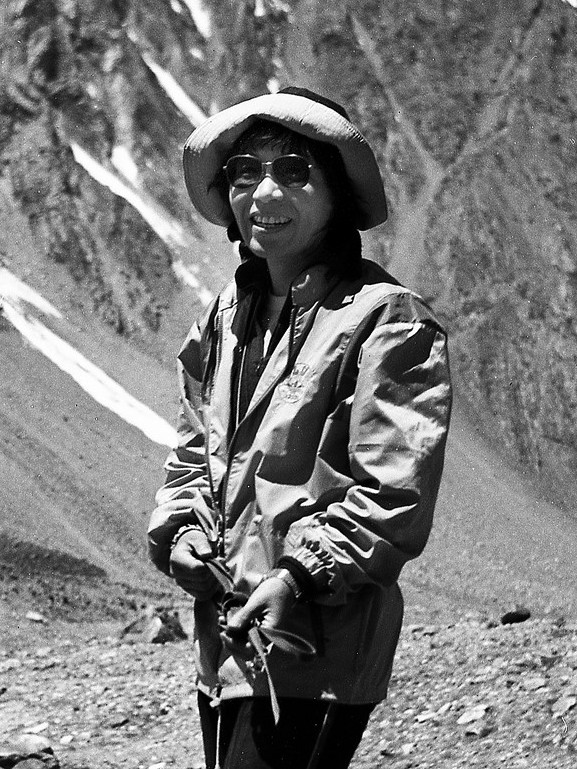
In 1992 Tabei became the first woman to conquer The Seven Summits — Denali (North America), Mount Elbrus (Europe), Kilimanjaro (Africa), Vinson Massif (Antarctica), Aconcagua (South America), and Puncak Jaya (Oceania). She was the 19th person in the world to do it and by 2005, she’d conquered 44 all-female mountaineering expeditions around the world. Her personal mission? Climb the highest peak in every country in the world. By the time she died at the age of 77, she had finished more than 70.
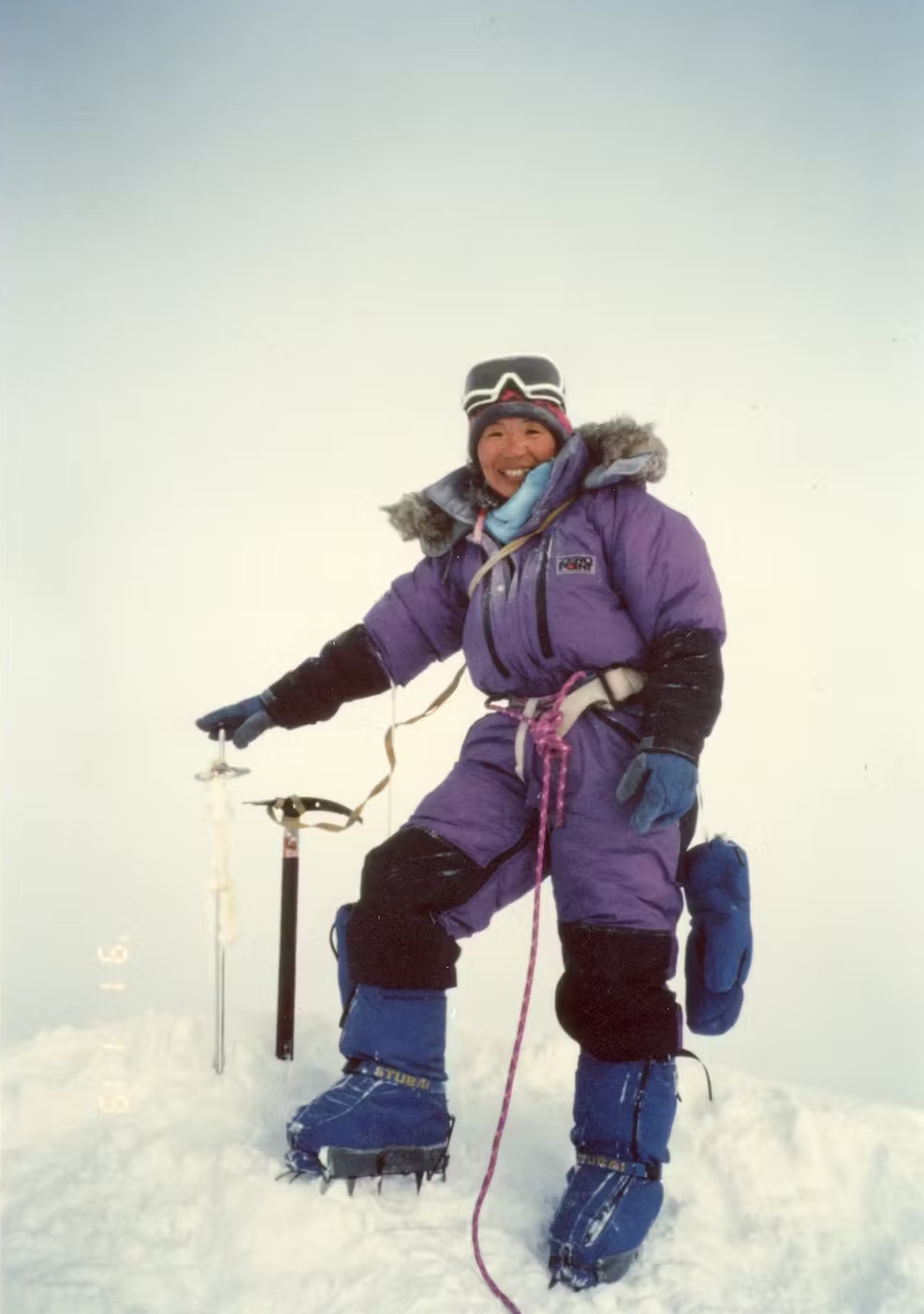
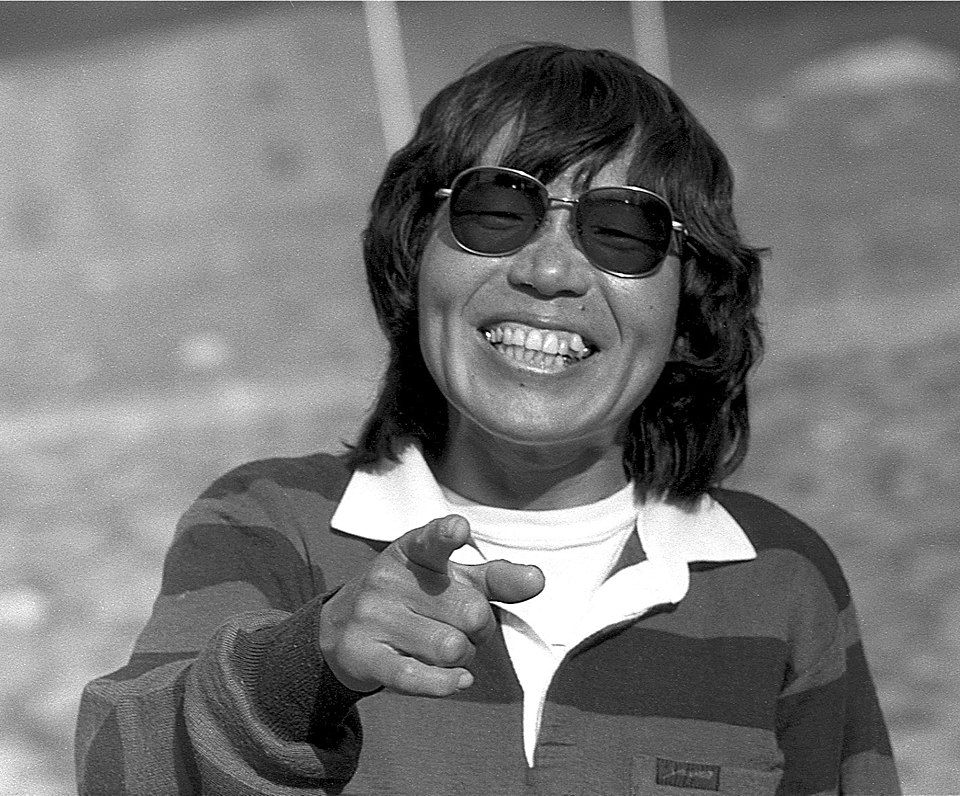
Unlike many of her climbing companions, Tabei lived a long life. Even after a cancer diagnosis in 2012 she continued to climb, leading young groups on expeditions and advocating for high-altitude rubbish clean-ups. She died in 2016, but her legend lived on: an asteroid was named after her — 6897 Tabei — and in 2019, a mountain range on Pluto was named Tabei Montes in her honor. In 2025 a film on Tabei called Climbing for Life opened the 38th Tokyo International Film Festival. It marked the 50th anniversary of her climb to Everest’s summit. Every time she climbed, Junko Tabei carried a quieter truth into the mountains: that innovation and a strong will are as important as money, prestige, or perfect gear. Function is crucial up there in the snow, but when things get brutal? Resolve might just be the sharpest tool you’ve got.
This feature was written by Melbourne-based writer and performer, Esther Rivers.
