

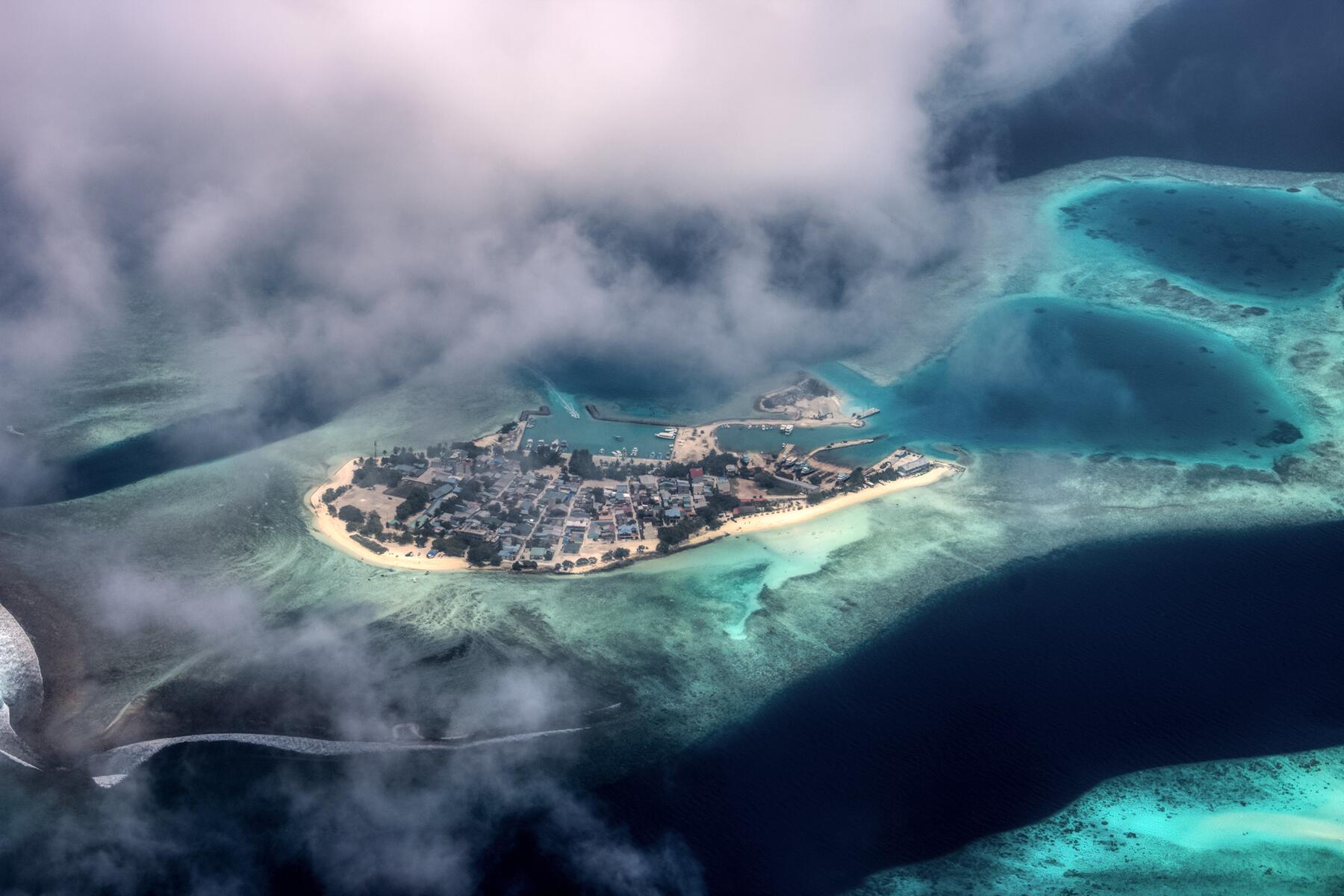
The Maldives is renowned for its natural beauty, but most visitors are unaware the majority of high season is choked by pollution.
As thousands of travelers book their dream vacation to the Maldives each month, the majority have no idea it’s regularly on regular red alert due to dangerous levels of smog during high season. And since tourists in the Maldives normally spend all day, every day, outdoors, they could be in one of the most at-risk groups.
It’s easy to assume such a remote archipelago would have clean air. After all, it’s 380 miles from its neighbors in India, and 480 miles from Sri Lanka. There’s a constant sea breeze, only 19 percent of the tiny population owns a vehicle, and the Maldives is frequently warning the world about the perils of climate change. But researchers at Maldives National University have discovered that almost 70 percent of high season days (December to March) see air pollution exceeding World Health Organization safety levels.
The Maldives’ 2025-2026 high season has been one of the smoggiest in years, according to many residents, who are starting to get fed up with what’s just been shrugged off as seasonal haze for years. So, I decided to start checking Air Quality Index (AQI) levels daily (starting in early December 2025) and spotted that they frequently hit 160 and above. That little number is officially classed as “unhealthy for all“ (not just people with health conditions).
Continue Reading Article After Our Video
Recommended Fodor’s Video
The Health Protection Agency (HPA) fired out a few red alerts for air quality this season. But they were only on social media, and only in the Maldivian language, which is called Dhivehi (English is the primary second language). While a Maldivian government institution absolutely should be posting updates in their national language, what this did mean is they were easily missed by many of the 2.25 million annual international visitors (who don’t understand Thaana script).
“This risk is easy to miss precisely because the setting looks clean and relaxing,” said Dr Saravanan Thangarajan, a Harvard Visiting Scientist and environmental health expert. “People cannot reduce exposure if they are never clearly warned. The surroundings may look pristine, but the lungs still respond to the pollutant load, not the scenery.”
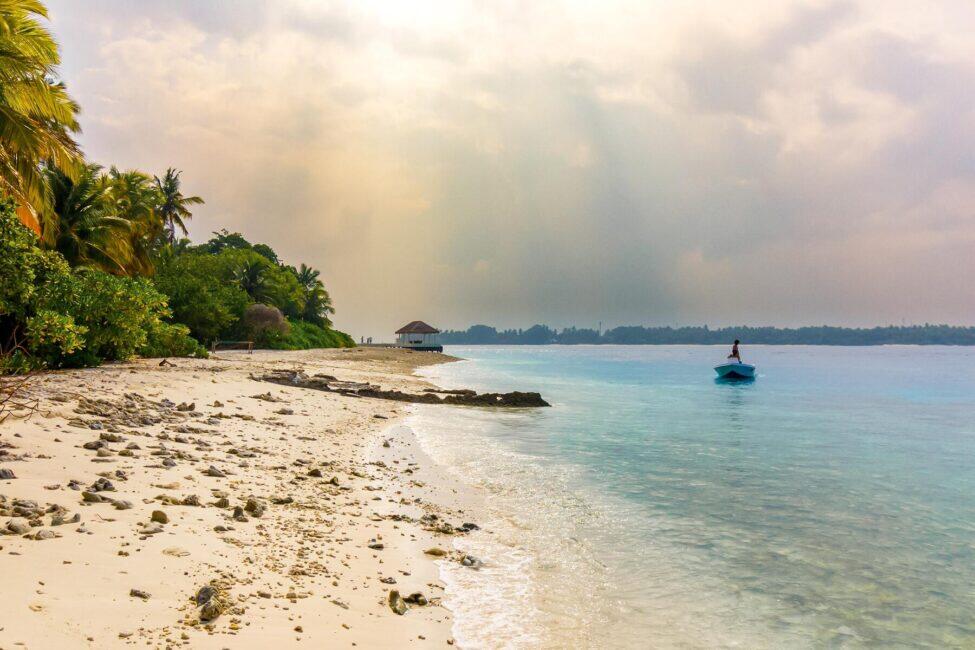
The Asian Brown Cloud
The smog in the Maldives is made of fine particulate matter called PM2.5 that comes from vehicle emissions, coal-fired power plants, agricultural burning, and wildfires. But it isn’t an industrial nation; tourism and fishing are the main sectors, and there’s only 115 square miles of landmass. However, there’s a very simple explanation for the smog. The World’s Leading Green Destination 2024 and 2025 inconveniently lies downstream from one of the planet’s most polluted regions.
The Asian Brown Cloud (ABC) is a massive layer of air pollution almost two miles thick, stretching from the Arabian Peninsula to China. Every December, the winds of the Maldives’ dry season monsoon (known as Iruvai in the ancient Nakaiy calendar) change from southwest to northeast. This pulls all those nasty particulates from the ABC southwards to the Maldives.
“These small particles can pass through our lungs’ defense systems and are believed to enter the blood directly. They can cause a rise in blood pressure, increased blood viscosity, and increased risk of cardiovascular and cerebrovascular diseases, like strokes and heart attacks,” explained Dr Mohamed Ali, a pulmonologist at Indira Gandhi Memorial Hospital in the Maldives’ capital city, Malé. “Simultaneously, our lungs are affected, and it also causes exacerbations of any underlying lung disease like asthma, COPD, and bronchiectasis”.
According to one report, almost 90 percent of high-season pollution around Malé comes from the Asian Brown Cloud to the north, so the Maldives can’t do much about it. And while the air quality can and will temporarily improve with rain, one of the main problems is that showers are pretty scarce in high season.
Cumulative Exposure
Tourists lured to the Maldives with promises of reliable sunshine during high season will normally spend most of the day outdoors enjoying the tropical beaches. They often eat all their meals outdoors too (due to the open-air design of the resorts) and usually remain outside sipping cocktails into the night. Which means, over the course of a typical 10-14 day vacation, travelers can be subjected to significant exposure, Dr Ali and Dr Thangarajan confirmed.
And apparently, the effect of the polluted air on the body is even worse if you exercise. That figures, since I remember feeling sick and having a headache sometimes after my daily runs around Male in high season, when I lived in the Maldives full-time. It made me think of all those tourists unwittingly pounding wakeboards, working up a sweat kayaking, and kicking their fins against the Maldives’ typically strong currents (snorkeling is the most popular activity).
“For travelers, the main concern is cumulative exposure. This means a visitor spending 10 to 14 days largely outdoors may accumulate meaningful exposure across an entire holiday, not just from a single bad day,” said Dr Thangarajan. “The risk becomes more concerning with swimming and energetic watersports because exertion increases the amount of polluted air a person inhales. Vigorous outdoor activity can raise the inhaled pollution dose several-fold, compared with resting outdoors. That is one reason exposure in a beach setting can be underestimated”.
Keeping the Maldives’ Pollution Hush-Hush
I asked numerous friends and contacts in the Maldivian tourism industry about the high-season air pollution. I was also curious about how they felt when the ABC caused visibility to drop to less than a mile, triggering seaplane suspensions because the pilots navigate using VFR (Visual Flight Rules). While most agreed tourists should be alerted when air pollution levels are risky, none of them were willing to go on the record about it.
“It’s very hush-hush,” one of them explained, adding that the Maldives is currently being hit hard by the impact of the Iran War (cancelled flights and diesel prices doubling the cost of island transfers), so they were concerned about harming tourism further. Some mentioned they heard the Maldivian government is discussing air pollution with its neighbors. But no one could point to why the AQI alerts aren’t being shared with visitors.
The Ministry of Foreign Affairs confirmed in February that it’s now discussing transboundary air pollution with its neighbors. In the statement, the ministry admitted the situation raises concerns not only regarding public health but also the “tourism-dependent economy.” But as of yet, there are no specific warnings for travelers.
Both Dr Thangarajan and Dr Ali suggested alerts could be issued both in Dhivehi and English to give visitors a chance to protect themselves. “I think the current communication model is too limited for an international travel destination. Air quality alerts should be integrated into travel systems visitors use, including airline notifications, hotel check-in materials, resort apps, excursion desks, and weather or travel platforms,” said Dr Thangarajan.
Dr Ali suggested emails or texts could be another solution.
“Then they can plan their outdoor activities depending on the conditions of that day,” he added.
As Simple as ABC
If you take a look every day, you’ll see that the AQI fluctuates, so not all high-season days will have risky air pollution levels (30 percent of days in December to March should be fine). The worst of the air pollution appears to be over, for this season. And tens of thousands of travelers planning to visit the Maldives during shoulder season and low season (April to November) are unlikely to have any air pollution issues, because the wind changes direction in April to welcome the southwest Hulhangu monsoon (which is actually one of the lightest monsoons in the region, if you’re down for taking a gamble on the weather in return for lower room rates).
There is also some hope if you look at the bigger picture. It seems that if the Maldives is successful in encouraging its neighbors to cut their vehicle and factory emissions, big changes are possible. A World Bank report from December 2025 laid out solutions for tackling the ABC. It was observed that through sustained action, China’s Jing-Jin-Ji region and Mexico City cut harmful emissions in half in only a decade.
The World Bank predicts that if similar action is taken across borders, the Maldives could have clean air all year round, not only when the wind changes direction. South Asia quite literally has the power of the winds of change in its hands (if they don’t blow the opportunity).
Tips for Staying Safe in the Maldives
Until such a system exists, there are a few things you can do if you’re visiting the Maldives in high season:
Check the Air Quality Index on a website such as IQAir daily (because it fluctuates) before planning outdoor activities. Maldives Independent also recently installed an AQI index on its homepage, and the Maldives Meteorological Service issues occasional warnings in English.
If the AQI is between 150 and 200, the public should avoid prolonged outdoor exercise. Sensitive groups like those with underlying lung or heart diseases, pregnancy-related vulnerability, or other pre-existing conditions should reschedule outdoor activities.
If the AQI is more than 200, everyone should avoid all outdoor exercises and stay indoors as much as possible. (This might be a good time to book a spa day.)
Consider using a well-fitted N95 or KN95 mask outside on poor AQI days if you’re particularly vulnerable, and add indoor breaks to your itinerary rather than staying outside continuously on poor AQI days. And, as tempting as it may be to keep the windows open, it’s advised to run the air conditioning on recirculation mode inside your hotel room.
