

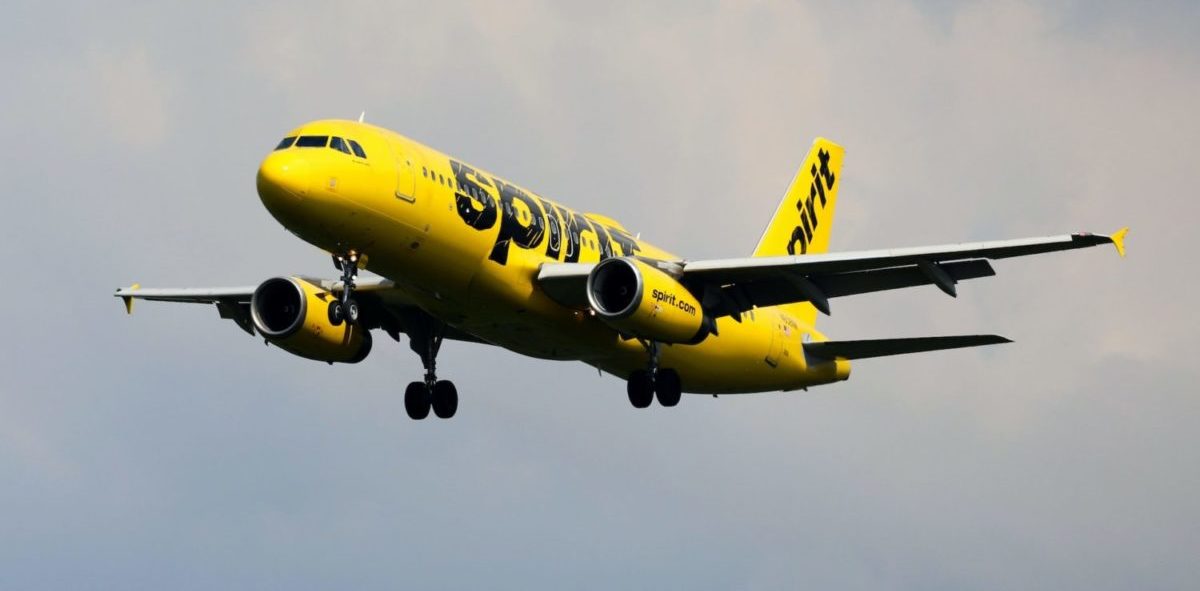
I’m not rooting for Spirit Airlines to fail, but its time has come.
That’s not just posturing: I’ve flown Spirit plenty over the years and wouldn’t hesitate to do it again tomorrow … OK, maybe not tomorrow. But the point is, I’m not above flying Spirit or any other budget airline – and like every other traveler, I’ve benefited from what Spirit brings to the industry.
Whether you love Spirit or avoid flying them at all costs, the Florida-based airline has been one of the biggest forces keeping fares low in the U.S., pushing larger airlines to compete on price and giving travelers more options.
But at some point, reality sets in … and for Spirit, that moment might be now.
Reports that the Trump administration is considering a $500 million bailout – potentially in exchange for up to a 90% equity stake – might sound like a lifeline on the surface. In reality, it looks far more like a temporary fix to a much deeper problem. Because the core issue hasn’t changed: Spirit can’t consistently make money in its current environment – and according to new reporting from CNBC, Spirit’s lawyer says cash isn’t going to last for very much longer.
United CEO Scott Kirby put it bluntly this week, telling investors: “The Spirit business model is fundamentally flawed, and it’s going to fail.”
Kirby has never been shy about taking shots at competitors, but in this case … he’s not wrong. Spirit’s ultra-low-cost model worked for a long time, but rising costs coming out of the pandemic, operational challenges, and most importantly, an industry shift to all things “premium” have steadily chipped away at its once-successful business model.
At some point, continuing to prop it up starts to feel like “throwing good money after bad” – something Transportation Secretary Sean Duffy has already cautioned against – and a government bailout doesn’t change that underlying reality.
Running Out of Runway
There’s a reason Spirit is reportedly turning to the federal government now: There aren’t any other options left. Spirit has stayed afloat thanks to money from its creditors, but that well has run dry.
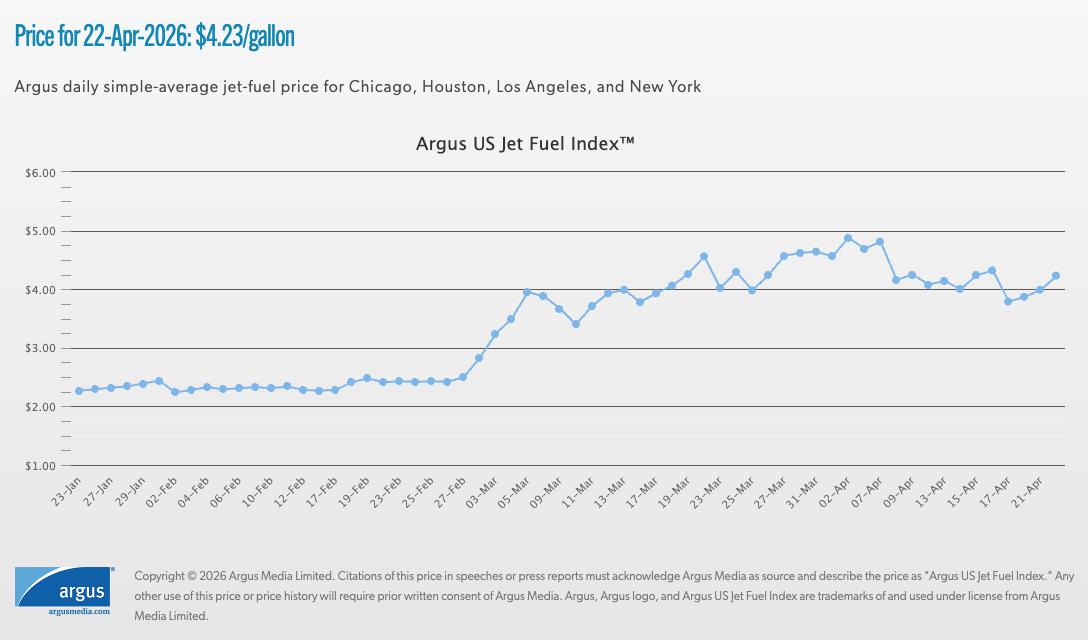
Like every other airline, the rising cost of jet fuel – due to the war in Iran – has no doubt hamstrung Spirit as of late, but that’s not really how we got here. Spirit was fighting for survival long before the conflict in the Middle East broke out.
The airline is in the midst of its second bankruptcy proceeding in less than two years, and there’s no clear or credible path forward. No merger waiting in the wings, no turnaround strategy that’s gaining traction, and no obvious way to return to profitability in the current environment.
Bankruptcy is supposed to offer a reset – a chance to shed debt and come back stronger. But when it becomes a recurring cycle without meaningful change to the business itself, it signals that something more fundamental isn’t working.
And that raises a difficult but necessary question: Should taxpayers be on the hook to keep it alive?

Spirit employs roughly 14,000 people, and those jobs are undoubtedly part of the administration’s thinking. President Trump acknowledged as much this week in an interview with CNBC, “I’d love somebody to buy Spirit. It’s 14,000 jobs, and maybe the federal government should help that one out.”
That’s a real concern, and it shouldn’t be dismissed lightly.
But even with that in mind, a $500 million bailout looks more like a band-aid than a solution. Without a fundamentally different business model, it’s difficult to see how Spirit avoids ending up right back in this same position – only with taxpayers now footing the bill.
A Fading Force in Competition
For years, we’ve rooted for Spirit because competition is everything in the airline industry. Even if you never booked a Spirit flight, its presence helped keep fares in check across the board.
But the uncomfortable truth is that Spirit’s role in that equation has been shrinking for some time now.
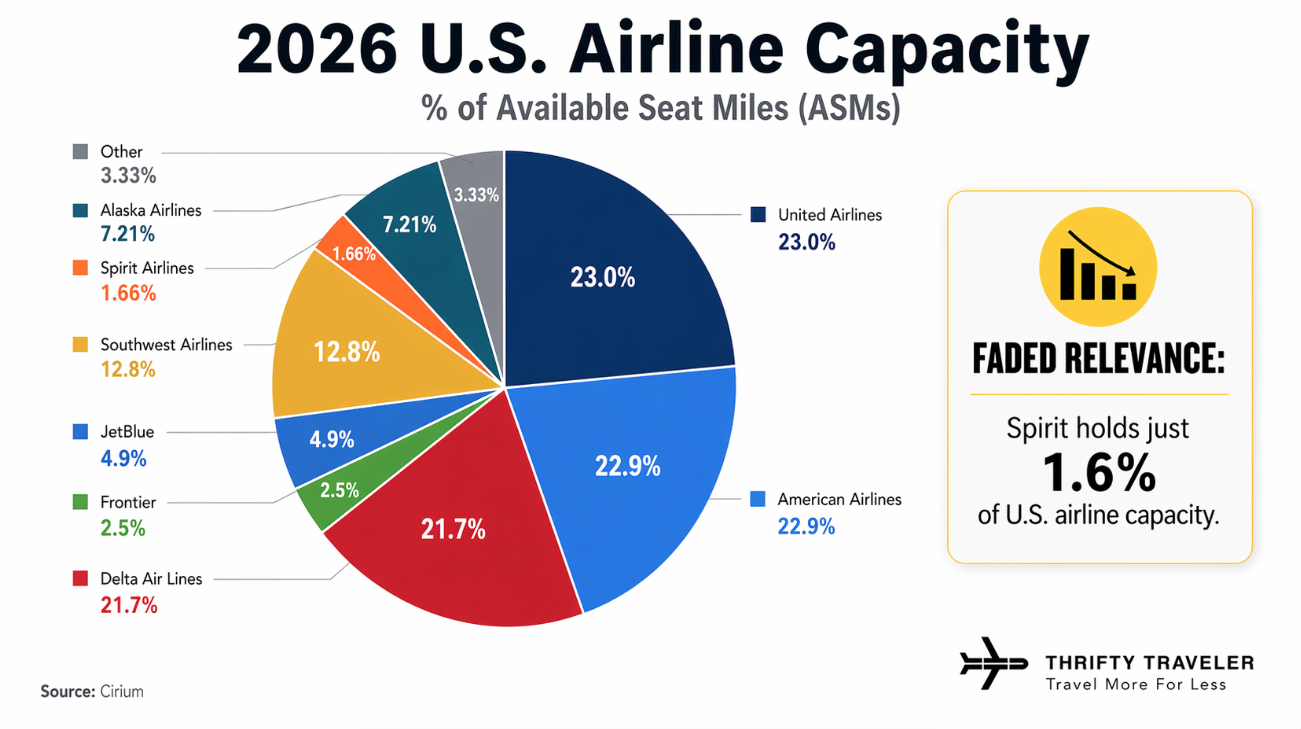
Today, the airline accounts for less than 2% of available seat miles among major U.S. carriers, according to data from aviation analytics firm Cirium. Just a few years ago, that number was closer to 4%, and while it looks slightly better when excluding long-haul flying, the overall trend is hard to ignore.
That’s not just a dip – it’s a steep decline in relevance.
Spirit’s absence would be felt most in its home base of Fort Lauderdale (FLL) and nearby Orlando (MCO), where it has historically had a strong presence. Outside of those two airports, Spirit currently operates (at most) a dozen or so routes from the likes of Atlanta (ATL), Newark (EWR), and Chicago-O’Hare (ORD). But beyond those hubs, its footprint has diminished significantly, with many airports now seeing only a handful of routes and limited frequencies.
That’s not nothing, but it also means Spirit no longer plays the same outsized role in shaping fares nationwide.
And if Spirit does disappear as a standalone airline, the impact on competition will depend heavily on who picks up the pieces. If JetBlue were to gain strength – particularly in South Florida – that could actually provide a meaningful boost to competition.
In that sense, losing Spirit doesn’t automatically mean less competition – but it does raise the stakes for what comes next.
The Last Best Chance Came and Went
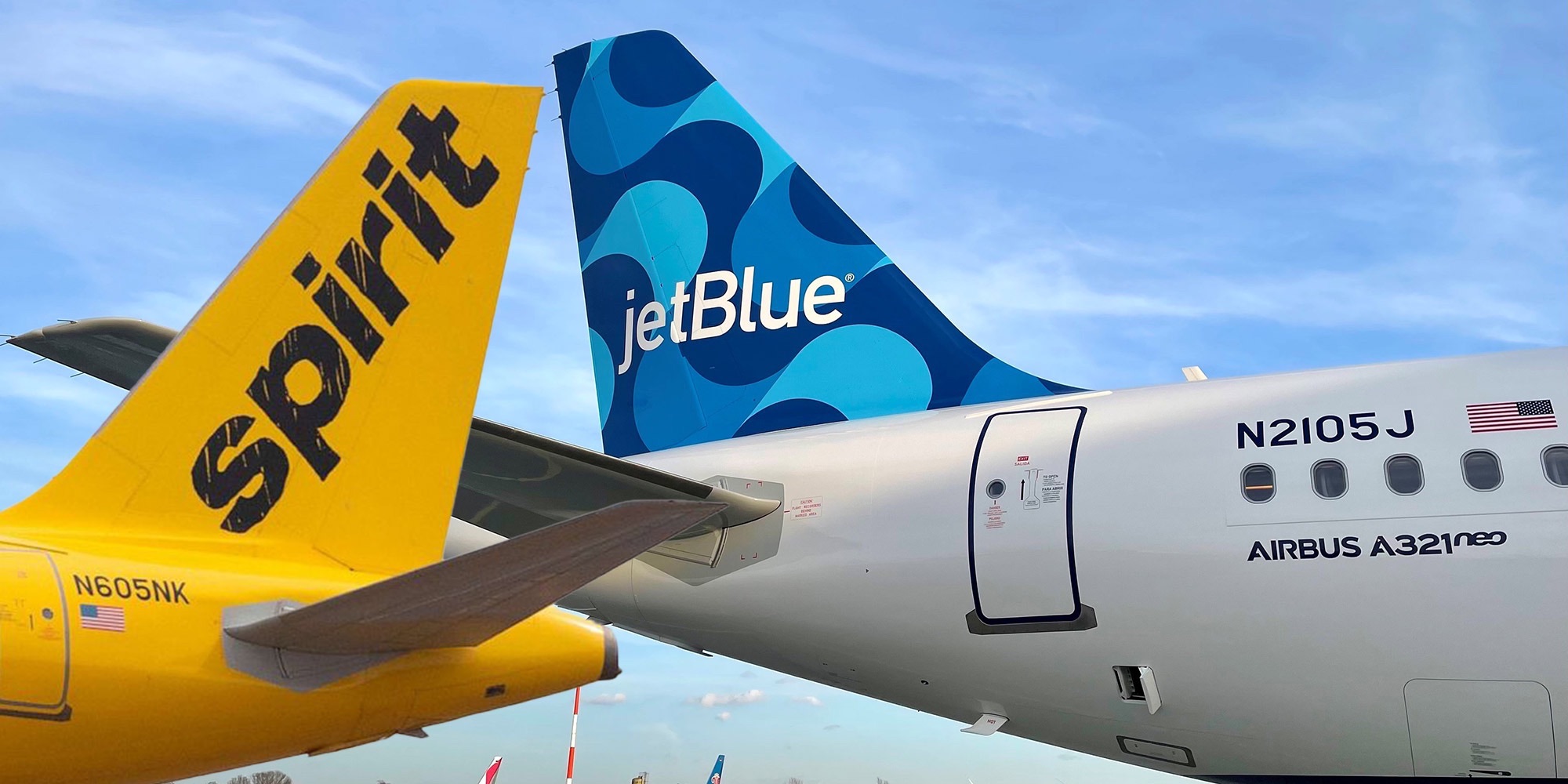
In hindsight, the failed JetBlue merger may have been Spirit’s best chance at survival. The Biden administration shot this down back in 2024, citing antitrust laws and the negative impact it would have on competition.
There’s a case to be made that JetBlue and Spirit weren’t the right fit, and that regulators’ concerns about competition were valid. But with Spirit once again on the brink of collapse, it may soon be irrelevant.
Most importantly, a merger with JetBlue would have given Spirit a much-needed reset.
The carrier’s list of problems is long – from bad contracts to high fuel costs, engine issues, and the lack of a truly “premium” product – but none of those compare to Spirit’s toxic brand image. Right or wrong, the airline built a reputation for itself … and not in a good way.
At this point, Spirit could sell fancy new lie-flat seats at a fraction of the price its competitors charge, and so long as the planes are yellow and have the Spirit name on the side, it still wouldn’t move the needle with travelers scarred by horror stories from the past.
A sale – and a fresh start – feels like the only realistic path forward.
A Bailout Sets a Dangerous Precedent
There’s also a broader issue here that extends well beyond Spirit itself. If the federal government steps in to bail out one struggling airline, it inevitably raises the question of what happens the next time another carrier finds itself in a similar position.
JetBlue isn’t exactly on a rock-solid footing, and Frontier operates a similar ultra-low-cost model that faces many of the same challenges. A bailout in this case could open the door for future requests, fundamentally changing the expectations around government intervention in the airline industry.
And that’s before even getting into the legal questions surrounding whether the administration has the authority to give Spirit a handout without congressional approval.
I’m no expert on the matter, but Gary Leff at View From the Wing suggests the most likely legal explanation is the Defense Production Act, which allows loans to private businesses when needed for national defense. “However, nobody plausibly believes that Spirit Airlines and its sub-2% of domestic air travel capacity is necessary for national defense,” Leff said.
If that does prove to be the legal leg the Trump administration stands on, I agree that the justification seems murky at best.
Bottom Line
Spirit Airlines has played an important role in shaping the U.S. airline industry, helping drive down fares and expand access to air travel for millions of people. But that doesn’t mean it can – or should – be saved at any cost.
A $500 million bailout might keep Spirit alive a little longer, but it doesn’t fix what’s broken. And without a fundamentally different path forward, it’s difficult to see how the airline avoids ending up right back in the same position.
As difficult as it is to say, Spirit’s time as we know it may simply be up.
