

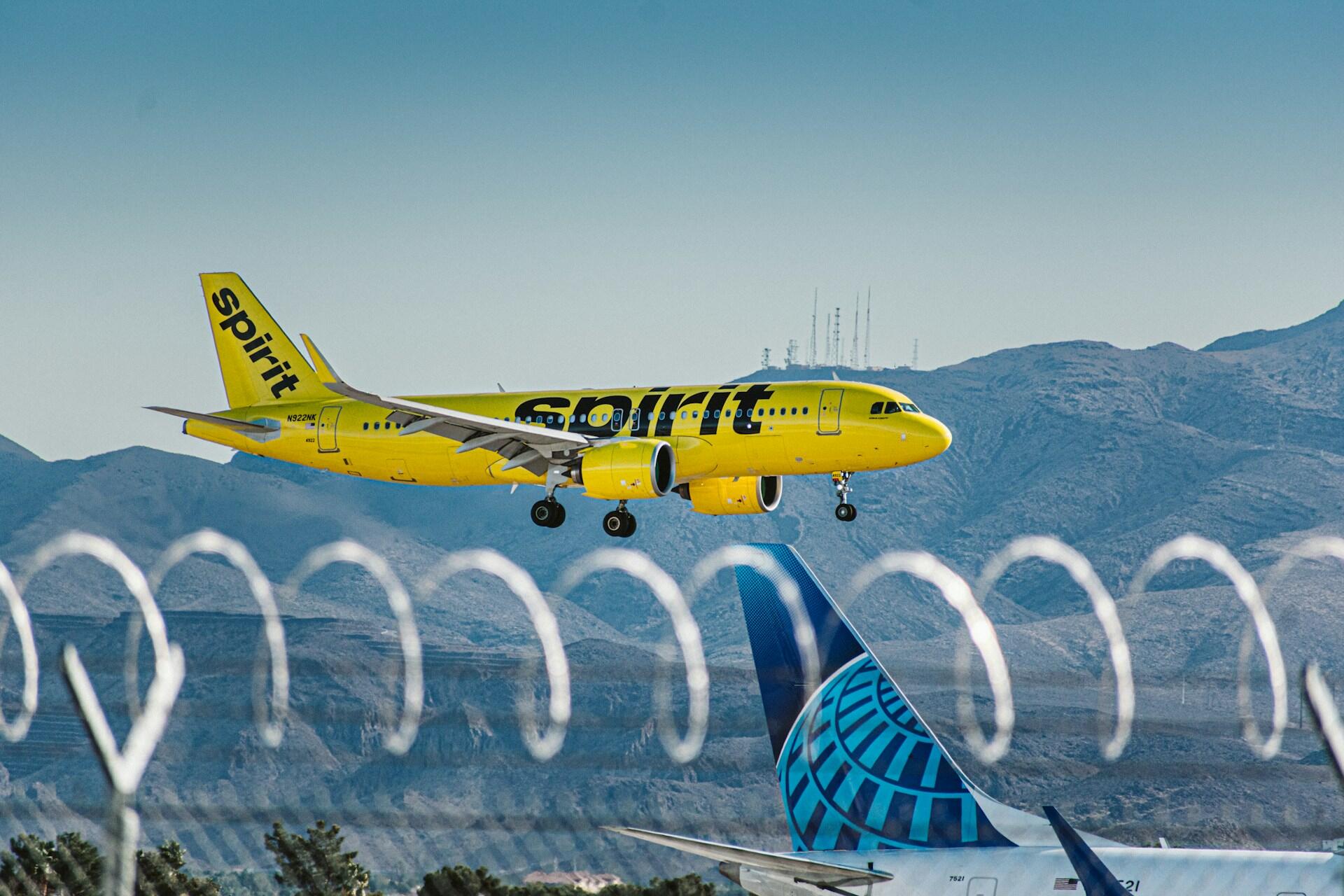
When an airline collapses, what happens to its planes?
Travelers at many U.S. airports in recent days may have noticed clusters of Spirit Airlines’ bright yellow airplanes parked in a remote area of the airfield.
But what happens to those aircraft, now that Spirit is no longer flying? The answer is complex and fascinating.
Questions of Ownership
There’s a different process for aircraft depending on who owns them. For U.S.-registered aircraft, sharp-eyed passengers will actually notice a placard in the forward part of a commercial aircraft–often just above the forward-most left-hand door known as L1–that provides the serial numbers, manufacturer, and registered owner of the aircraft.
In many cases, the airline is not the owner of the aircraft. Spirit, like most airlines, operated a mixture of owned and leased aircraft. If the owned aircraft are owned outright, a court-appointed administrator will make decisions about what to do with the aircraft until the court decides what to do with the company’s assets. If the owned aircraft weren’t yet paid off, they can be repossessed by the banks that own the loans. If the aircraft were leased, they can be repossessed by the lessors.
Continue Reading Article After Our Video
Recommended Fodor’s Video
Airports charge for aircraft parking, the same as they do for car parking, and the parked aircraft are currently running up a tab at the airports they’re parked at. Whether they’re dealing with defaults on liens or lease terms, the bankruptcy court should rule in pretty short order on who assumes rights of possession now that Spirit has ceased operations, and it will be up to them to decide what to do with the aircraft.
Where to Stash Spirit’s Fleet
Airport parking isn’t cheap for commercial airliners either. At Los Angeles International Airport, it’s about $1,000 a day to park at a remote parking position (although many airlines negotiate their own rates directly with airport operators). That’s not a great deal compared to specially designed aircraft storage airports like the one in Goodyear, Arizona, which can charge from $1,000 to $3,000 a month for long-term storage.
Desert areas are preferred for airliner storage because the dry environment can slow corrosion of vital parts, lowering the costs of ongoing maintenance during storage. There are typically several operators at each airport who prepare the aircraft for storage, such as taping over all the windows, doors, engines, and valves to keep sand and dust from accumulating.
What Happens Next
Once the court trustee, bank, or leasing company determines where they want to store the aircraft while they look for a new airline to sell or lease it to, they need to fly it there. Existing airlines sometimes have their own pilots operate non-revenue flights to or from storage, maintenance facilities that aren’t part of their networks, or when returning aircraft to lessors.
This isn’t always the most cost-effective, so there are niche operators like Nomadic Aviation Group that specialize in Transactional Flight Operations.
They employ pilots who are type-rated on most large commercial aircraft, and operate almost like their own tiny airline, providing transport and insurance to ferry aircraft where their owners need them to go. A lessor, bank, or court trustee will contract a transactional flight operator and typically provide them with legal documentation demonstrating they’re authorized by the owner to fly off in their airplane, and send them to the airport to pick up the jet.
Once at the airport, they typically have to pay off any parking fees owed to the airport by the aircraft owner (Spirit’s own debts get worked out by the bankruptcy courts; it’s rare for an airport to recover all of the rent and fees owed to them by an airline that ceases operations). Once they do that, they’re free to file their flight plan and depart.
The aircraft will all likely go into storage as soon as possible to keep costs down, and the lessors will work on finding new airlines to lease them out to. Once those leases are secured, they’ll be repainted, have their cabin furnishings changed out, and be flown to their new operators. Older aircraft that are less valuable on the sale or lease market can be sold for scrap or parted out (the engines used on some A320 aircraft are valuable at the moment, as they’re in short supply).
Airliners are sometimes stored in the desert for years before returning to service, but one thing they have going for them is that commercial airliner manufacturers Boeing and Airbus have a significant order backlog stretching out for years, so airlines looking to expand their fleets in the short-term now have more options at their disposal.
Many passengers who had their tickets cancelled when Spirit ceased operations could ultimately end up flying on former Spirit aircraft operated by other airlines in the coming months and years.
