


Although I do love our sad, grey island, nothing can hide the fact of its sadness. Nor its grey-ness.
In a bid to quell the adverse side effects the British weather, I’ve become obsessed with leaving the country as often as possible. And the frequency of doing so has landed me in some locations that are off the radar of most holidaymakers.
On my strictly enforced monthly pilgrimages to anywhere but the UK, I’ve become acquainted with Ryanair’s more unfamiliar destinations. It’s a great way to find little-visited European spots, often at minuscule prices – something that feels like a rarity in the current climate. Lured by the obscure, and the discounted fares, Lublin, a relatively unknown Polish city, has long been on my list of places to visit.
Read more: I went on the perfect Tuscan family road trip – at the worst time of year
True to form, the two-hour flight from Luton was mostly empty. I could only feel that for every empty seat, a bargain was missed. How can you argue with £16 each-way tickets?
Located on the east of Poland, it’s the eighth largest city in the country, close to the Ukrainian border. The proximity of the invaded country is noted by the gestures of solidarity hung and plastered en-route to the Old Town, just a 15-minute journey from the airport. It only costs £6 for an Uber, a price that tempted me away from the bus service.
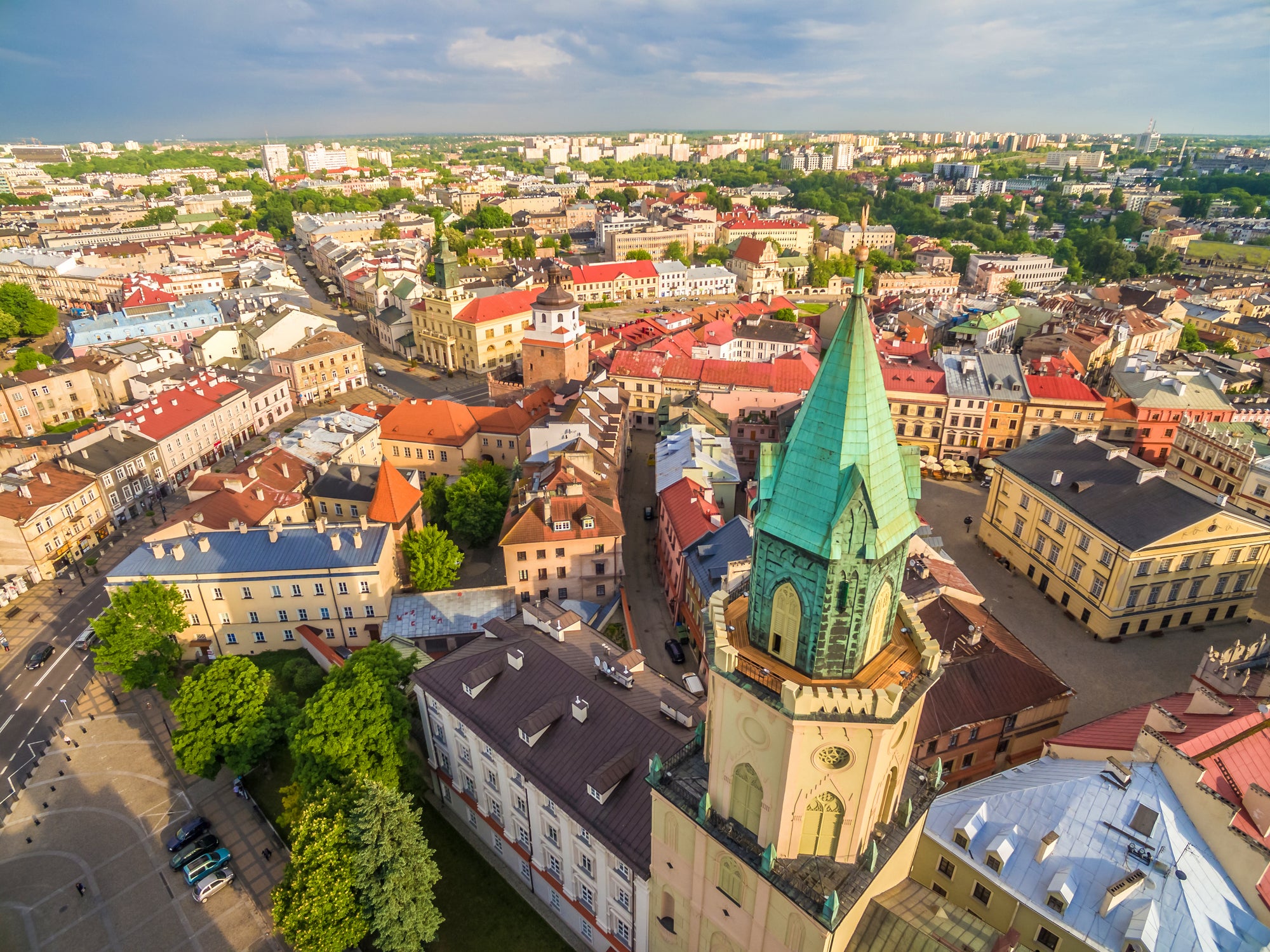
Lublin’s strong relationship with Ukraine is prevalent throughout the city, though it does not share the same volatility. What Lublin does possess is a sense of both modern and traditional, boasting both Old and New towns just a short walk from each other. But what instantly charmed me about the city was the fairytale feel of the former – despite it being steeped in a dark past.
In the years preceding the Second World War, Lublin was home to around 42,000 Jews. By 1941, a part of the Old Town was demarcated as a ghetto by the city’s governor; a year later, most had been sent to concentration camps. At the beginning of August 1944, there were only thought to be 300 Jews remaining in the city. It’s sobering to think that this picturesque square was once a place where death and destruction was commonplace. But remarkably, Jewish tradition still lives on today.
Cobbled streets host pubs, bars and restaurants, which also served as the backdrop for the 2024 comedy-drama A Real Pain, starring Kieran Culkin and Jesse Eisenberg. The film follows two cousins on a Jewish heritage tour, retracing the footsteps of their ancestors’ plight and the narrow escape their grandmother made from the Holocaust.
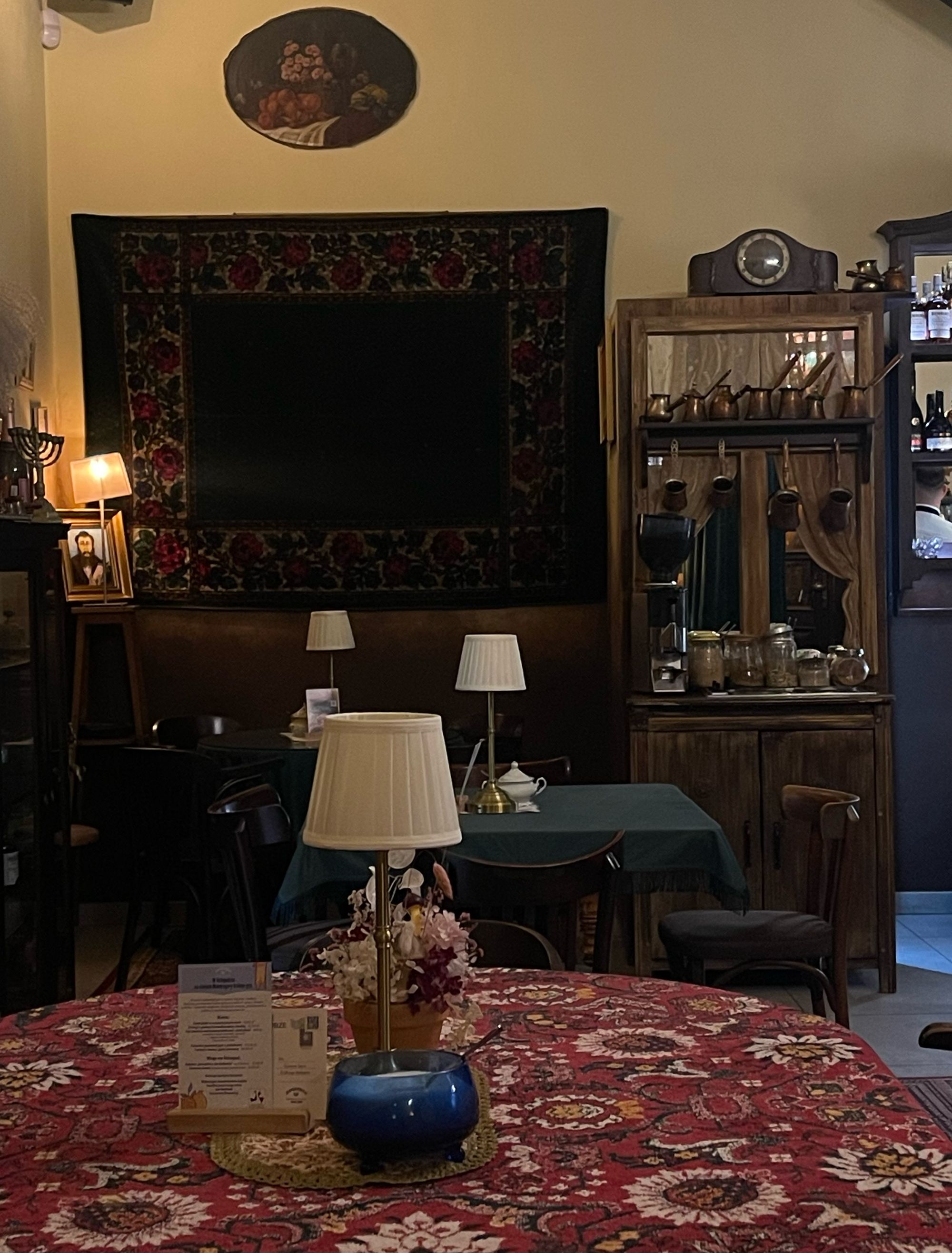
In one of the most poignant scenes in the film, the tour group stops for dinner and Kieran Culkin’s character starts to play the piano. It was filmed in Restaurant Mandragora, a must-see for both cinephiles and history buffs. Luckily, I’m both.
The restaurant’s interior is draped in tapestry and the decor is probably most synonymous with your great-grandma’s house. Glowering pleated lampshades, folk music and old photographs provide the ultimate in comfort. Tradition doesn’t only dress the restaurant. The menu is full to the brim of classic Jewish dishes and regional cuisine.
“The most important thing here is the kitchen, and you. We cook for you,” restaurant owner Iza writes in the front of the menu. Slightly overwhelmed with all the new dishes, I ask the waiter for recommendations and am provided with a run-down of preferred flavours. The Lublin-style beef cholent – essentially a slow-cooked stew – did not disappoint.
Read more: What happened when I took a pilgrimage through the Andalusian art trail
The accommodation options in the city are suitably traditional, too. I opted for a 15th-century tenement house, Apartment Magdalena, which cost just £56 a night – which, as a group of three, worked out at £18 each. That’s about the cost of a cocktail in London these days. Overlooking the medieval square, with a perfect view of Lublin Crown Tribunal, the dark wood furnished apartment is quite remarkable. I can’t quite comprehend the price and the view, it’s a real treat.
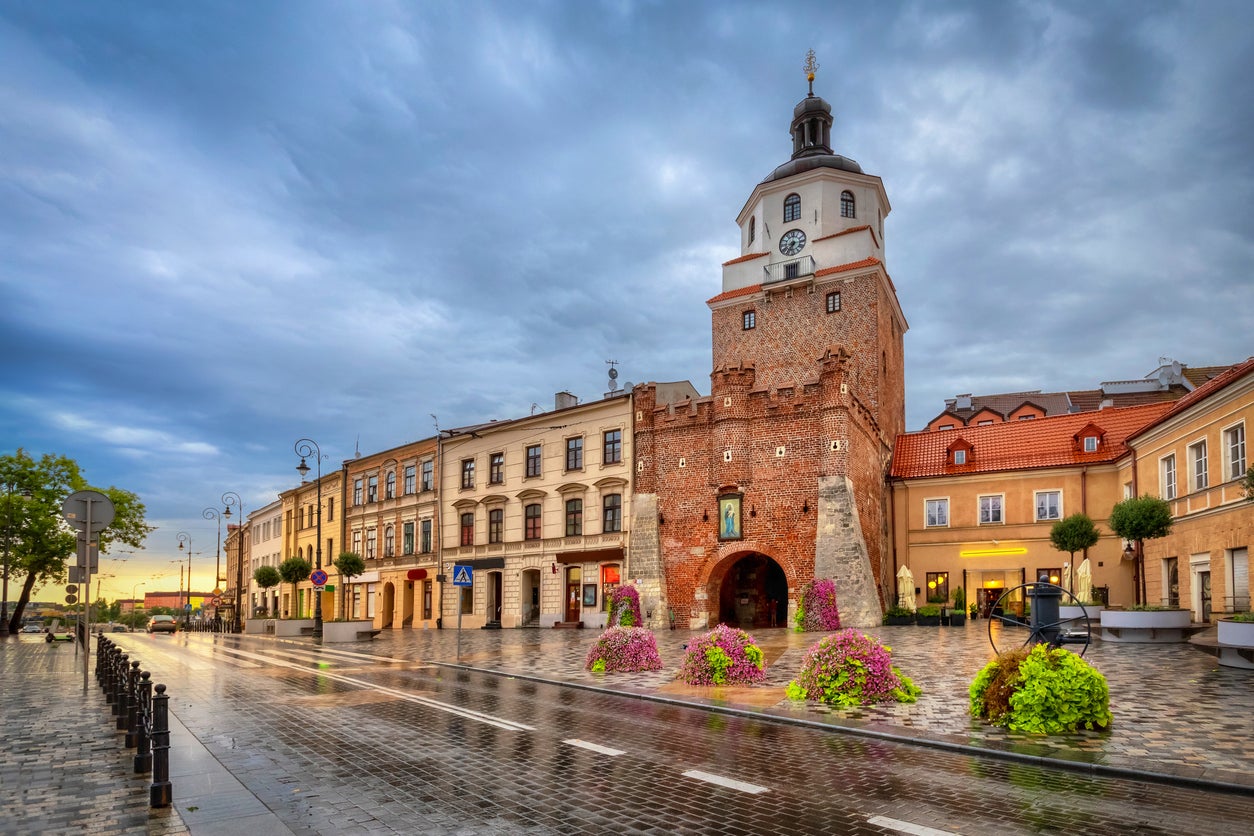
Lublin is just as pretty at night as it is in the day. A walk under the Brama Krakowska Gate, the Gothic monument welcoming you into the heart of the historic square, leads to the centre of the New Town that was recently renovated in 2017. The threshold is made literal by the Portal, a circular sculpture with a screen inside, that shows street scenes from across the world. It has been paired with Vilnius, the capital of Lithuania, and the Brazilian town of Barra Grande, linking unlikely Lublin to the rest of the world.
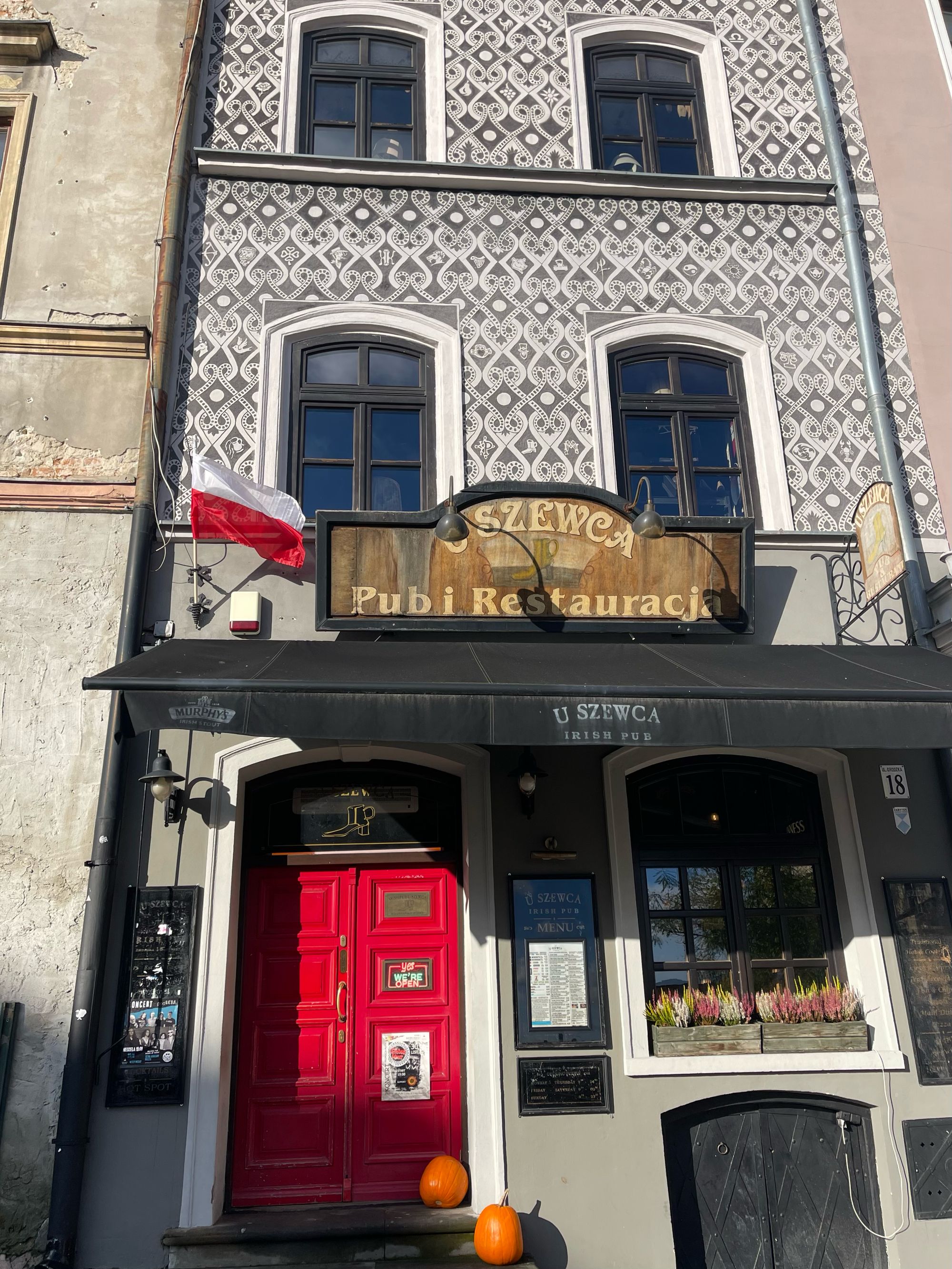
Its international credentials stretch to the drinking establishments, too. I find the jackpot pairing, Pub u Szewca, an Irish and Polish inn that is easy on both the eye and the purse. The walls are covered with a splurge of frames, while dark wood detailing and long leather booths are ideal for a languid afternoon.
I forgo a pint of Guinness for the local lemon vodka, acting as a zesty, yet sweet, palate cleanser. Lubelska lemon vodka has been distilled in Lublin since 1906 and I see why it’s still popular 100 years on. It’s even made it to the shelves of Tesco.
Keen to continue trying the local specialities, I search out cebularz Lubelski, or the Lublin flatbread. It’s packed with onion and poppy seeds, and acts as an edible reminder of resilience, with the bakery just inside what was once the poorest part of the city. It’s the perfect bite to keep your hands warm while exploring the cusp of the Old Town, which is presided over by the 12th-century Lublin Castle, a huge cream structure that has served many purposes, including a post-war prison. It’s now a museum on the edge of the liberated ghetto.
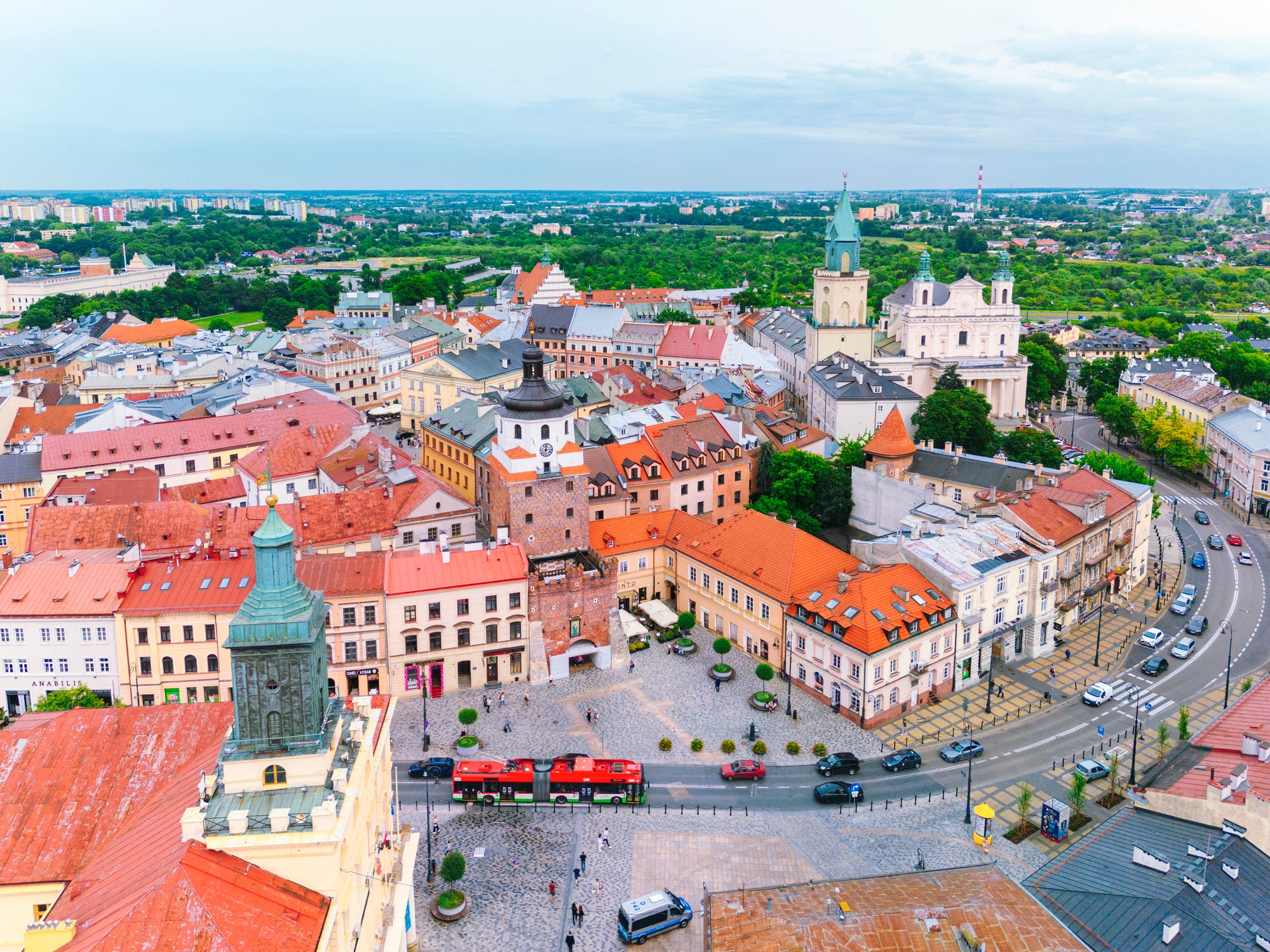
Strolling the streets of Lublin is calming, even if I am aware of the darkness that filled them some 90 years ago. But taking a walk over the picturesque hill through Grodzka Gate feels hopeful and a reminder of how far Lublin has come. And I only see an upward trajectory.
When I first shared that I was heading to Lublin, friends thought I meant Dublin. But there was no mistake – the city offers an affordable European city break, without a swarm of tourists impeding on the historical hub. Saying that, Lublin has been named one of Europe’s Capitals of Culture for 2029. So you might want to visit before it sheds its obscurity and falls victim to the conspicuous candy shop treatment.
How to get there
Ryanair offers flights from London Luton to Lublin from £29 return, taking around two hours and thirty minutes.
Where to stay
The charming Apartment Magdalena overlooks the city’s medieval heart and is ideal as a base. Rooms start at £40 per night.
