

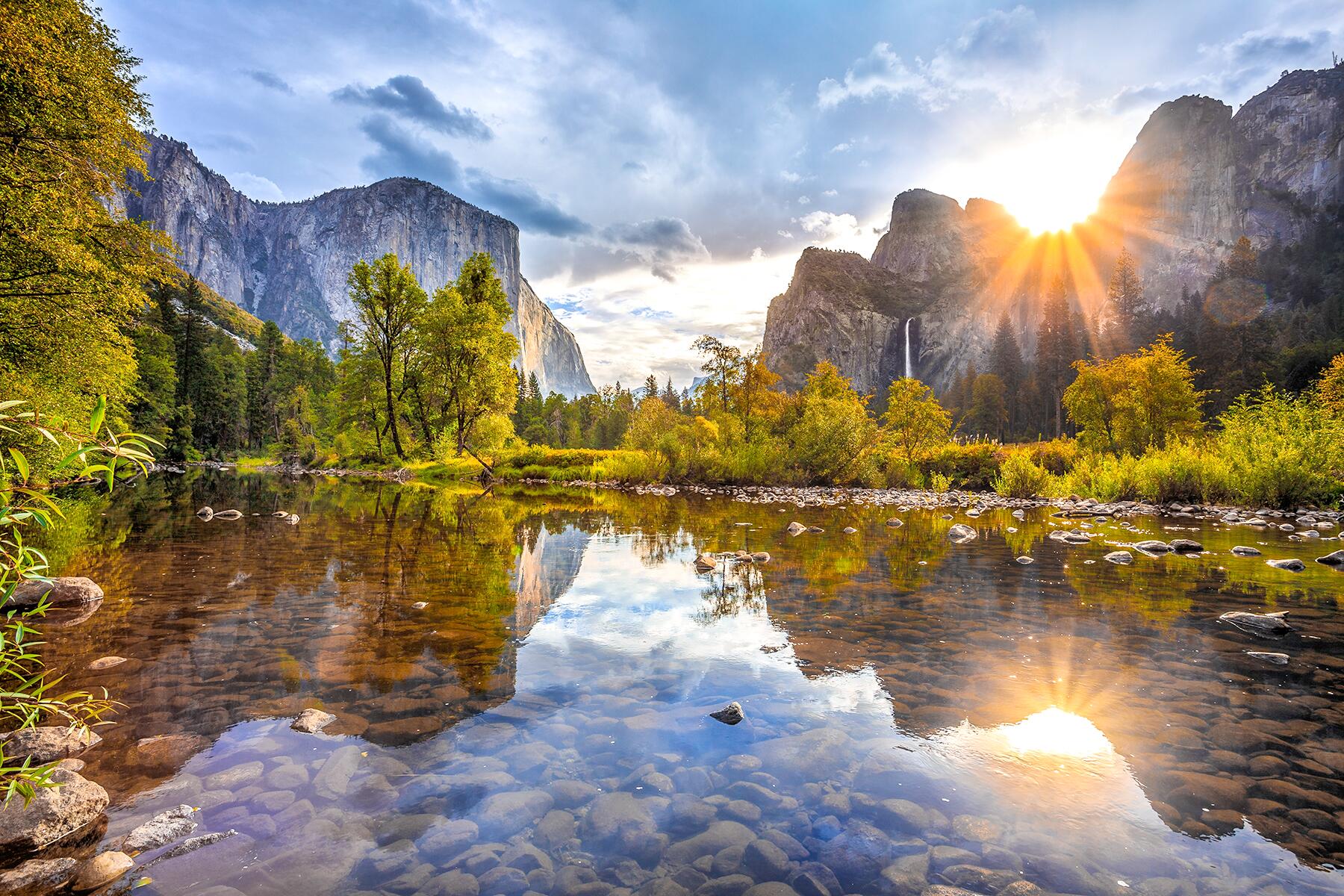
The Presidents Day weekend was a mess at the national park.
Over the long Presidents Day weekend, throngs of travelers visited California’s Yosemite National Park. Every year, travelers from across the U.S. come to Yosemite to see the majestic Firefall—the magical event when Horsetail Fall turns bright orange for a few minutes. This year, the park dropped its reservation requirement, opening it to everyone. But the free-for-all weekend turned into a crowded mess with congestion and traffic jams, SFGATE reported.
Despite the problems over the weekend, the National Park Service (NPS) announced this week that it will stop reservations altogether at Yosemite, Arches, and Glacier parks.
Messy Weekend
The Firefall is a two-week event in February. The visual spectacle, when it looks like the fall is on fire due to the setting sun, lasts for five to 15 minutes just before sunset. However, hundreds of travelers arrive hours in advance to get a prime spot, waiting in the cold for a chance to see the unexpected sight.
This year, park lovers took advantage of the four-day weekend, but the weather conditions didn’t align for a sighting. On top of it, the park was crowded, the parking lot was full, and the shuttle service was delayed.
Jon Adams, a park visitor, had to wait three hours with his wife at a shuttle stop to go back after they were unable to view the falls. There were more than 100 people, he said, and he handed out warmers to many who were unprepared for the freezing weather and the long waits. He told SFGATE, “This was not ideal for people trying to have a once-in-a-lifetime Firefall experience.”
Continue Reading Article After Our Video
Recommended Fodor’s Video
On the website, the park service advises travelers to carry warm boots and extra layers. “Anticipate a long walk from the parking to the viewing areas and plan to spend at least a few hours outdoors in February,” it says.
Related: 12 Things to Know Before Visiting Yellowstone National Park
No Reservations
Yosemite introduced a pilot reservation system during the pandemic, when annual visitation topped 4 million. In 2023, it removed the system, then brought it back in 2024 to curb congestion and overcrowding. In 2025, after some uncertainty, the park scaled back reservations but still required visitors to book spots during peak hours.
Critics say the reservation system works against those who are not tech-savvy and robs people of the opportunity to plan last-minute trips. Supporters praise the system for managing crowds and reducing strain on nature.
This year, though, the park will allow people to visit without reservations. The NPS announced that “a season-wide reservation requirement is not the most effective approach for 2026.” Instead, it will use other traffic management strategies, including real-time traffic monitoring, encouraging recreation outside Yosemite Valley, and additional staffing.
Kevin Lilly, acting assistant secretary for Fish, Wildlife, and Parks, said in a statement, “Our national parks belong to the American people, and our priority is keeping them open and accessible.”
The National Parks Conservation Association, a supporter of the reservation system, does not support this decision. According to the group, the reservation system works. It helps manage crowds during peak times and reduces the burden on natural environments. Mark Rose, senior Sierra Nevada program manager for the National Parks Conservation Association, criticized the move. “Eliminating Yosemite’s seasonal reservation system will undoubtedly lead to hours-long traffic jams, damage to park resources, strain on remaining park staff, and ruined experiences for visitors.”
He also added that this might create the perfect storm after 25% of the NPS workforce has been cut across the country.
Related: New National Park Fee Is Causing Miles-Long Lines — and Driving Visitors Away, Staff Say
Last year, the Trump administration trimmed budgets for national parks and reduced the workforce. Many reported they were unable to collect entry fees because of a lack of employees, and they were losing money. Guided tours were reduced, educational programs dwindled, and maintenance became a problem. Beyond infrastructure issues, it also affected research and conservation efforts and limited emergency services in parks.
Yosemite is one of the most-visited national parks in the U.S., but it also faced challenges in 2025 due to cuts. With fewer park rangers policing visitors and protecting the park, travelers are flying drones, driving in no-go zones, and littering. During the government shutdown, when the parks remained open without staff oversight, brazen visitors went wild with illegal camping, graffiti, and BASE jumping.
Related: The 10 Most At-Risk National Parks in the United States
Amid all of this, the Trump administration is also being accused of erasing history from national parks. It advised parks to report displays that portray America in a negative light, and some of the flagged exhibits involved slavery and Native American history.
