

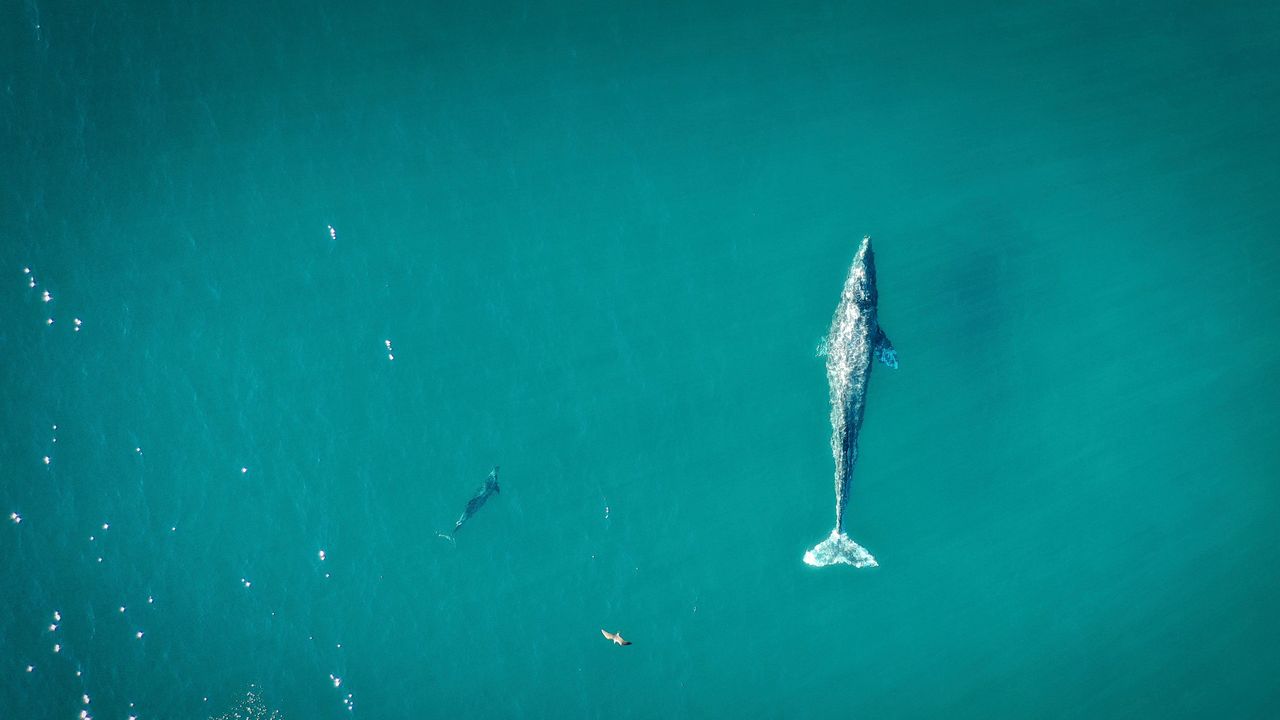
With its vast and diverse coastline, there aren’t many better places to go whale watching than in California. Few experiences are as mind-boggling as finding yourself feet away from the most massive mammals on planet Earth—but what you’ll see among the waves depends on a few key factors, namely where and when you go.
“The most successful wildlife trips follow animal patterns and seasonality,” says Condé Nast Traveler Top Travel Specialist Josh Geller of Embark Beyond. Gray whales head southward down the coast during winter, in a journey that happens to be the longest migration of any mammal on the planet. Moreover, you might get lucky and see some fin, humpback, or minke whales during that time. In spring, the gray whales head north again, fin whales become more abundant, and orcas populate Northern California waters. Come summertime, the blue whale dominates the deep waters off Southern California. In the fall, attention shifts to the humpbacks in the south and back to the orcas around Monterey.
Key to the whale-watching experience, however, is mindfulness. “It’s important to keep in mind that we are guests in these animals’ natural habitat,” says Geller. “Leave their environment as you found it, stay a respectful distance away, and listen to the experts on any other rules of engagement. These principles are even more critical in the ocean.” Some practical tips: apply sunscreen and dress in layers, with windbreakers and waterproof elements recommended. Your boat will be traveling fast through the water, so if you wear a hat, be sure it’s the type you can secure under your chin—so that you don’t lose it, yes, but also to avoid it flying off your head and littering. The ocean is the whales’ home after all.
While we’re on the subject, keeping your distance in all ways is crucial. “This is not an invitation for tourists to further approach or touch the animals,” says Condé Nast Traveler Top Travel Specialist Arielle Lightcap of AdventureSmith Explorations; it’s literally in the name—whale watching. Follow your guide’s advice, be patient as you scan the waves, and, as Lightcap says, “Enjoy the moment.” She also recommends tucking those phones and cameras away as much as you can. “Unless you’re an avid photographer with the right lens at the right time, you can miss the action tinkering with your gear. Be sure to enjoy the view outside of your lens.”
Below, find some of the best places for whale watching in California, as recommended by our Top Travel Specialists.

