

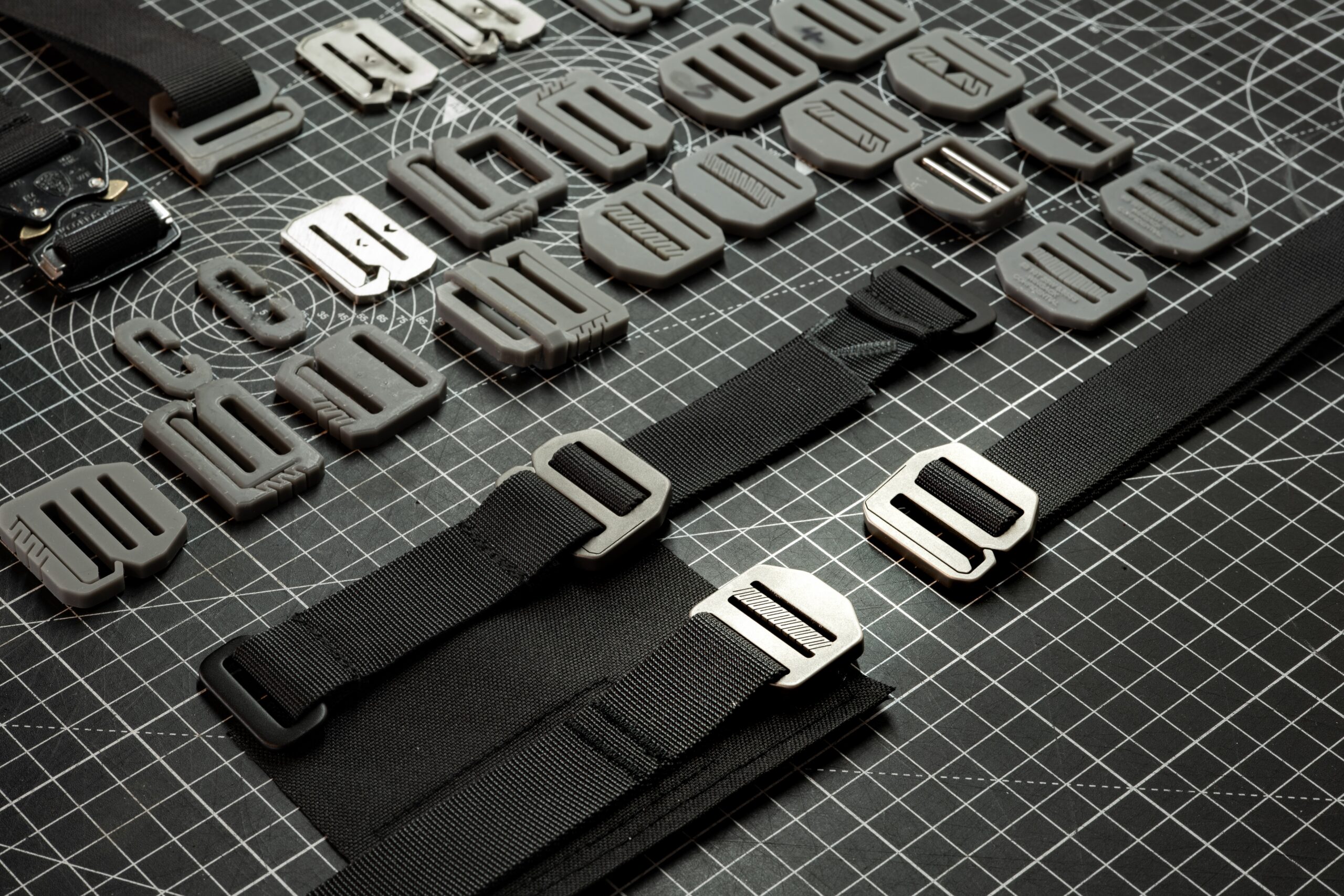
The side-release buckle. Ladder lock. COBRA. Fidlock. The carry hardware canon is a short list, until an engineer who used to design hair dryers for Dyson showed up and started asking questions.
A different kind of thinking

To understand what Alasdair MacLaine has built, you need to understand where he came from: Dyson. A brand famous for its meticulous approach to design and engineering. At Dyson, intuition is a starting point, not an answer. You map every way a product might fail before it exists. You reduce variables systematically so you know exactly what you’re testing. You run Taguchi matrices — a statistical method for designing experiments that finds the optimal combination of variables with the fewest possible tests — and you apply ‘FMEA (Failure Mode and Effects Analysis) thinking’ , which Alasdair explains means sitting down before a product launches and asking, methodically: what could go wrong here, how likely is it, and how bad would it be if it did? Then you design against those answers.
It’s a culture of systematic iteration that produced 5,127 vacuum prototypes before James Dyson was satisfied. You don’t guess at Dyson. You test to failure, and then you understand exactly why something failed before you decide how to stop it failing again.
The specific moment that matters came while MacLaine was working on the Airwrap which uses the Coanda effect, directing air using precisely designed fins to remove the need for a brush which is prone to tangling. One of the processes explored to test the invention was electro-discharge machining: a process where electrical sparks erode material with extraordinary precision, cutting geometries that conventional tooling can’t reach. No contact, no cutting force, no distortion. EDM wire cutting, borrowed from aerospace and precision engineering, was the answer. It worked.
“I was kind of fascinated by the process and that’s obviously stayed dormant as anything I’ve used for over 10 years,” MacLaine tells me over the phone.
He carried all of that out of the door with him. Then he founded Wingback — first as a leather goods brand, then almost accidentally as a stationery brand, and now a steadily evolving carry brand with something genuinely new to say.
What’s actually broken
Most people haven’t thought critically about the buckle on their bag. It’s just there. It works. But look more carefully at what’s actually happening across the hardware landscape and a pattern emerges — and once you see it, you can’t unsee it.
Injection-moulded plastic is the workhorse of the category. Cheap, light, and functional enough for the vast majority of applications, it’s what you’ll find on everything from a $30 daypack to gear that costs considerably more. But the failure mode is inherent to the design. The mechanism works by applying clamping force through a fixed geometry — and that geometry has limits. Apply enough load and you get slippage. Apply more and you get breakage. The material is doing the job, but it’s fighting its own nature to do it.
Metal hardware is a genuine step up. COBRA®, developed by AustriAlpin by way of parachuting rigs, became the gold standard for a reason — bomb-proof, tested to extraordinary load ratings, earned its place in everything from military kit to premium technical luggage. Fidlock brought magnetics into the conversation and made the everyday click-in feel genuinely satisfying. Both are real innovations. Both moved the category forward.
But here’s what’s curious: most are still built on the same fundamental logic as the plastic buckle. Multiple components. Springs. Assembly points. Each joint is a potential failure point. Each spring is a moving part that will eventually fatigue. The materials are dramatically better. The underlying architecture — the idea that a closure mechanism is something you build from parts — hasn’t really changed.
The gap MacLaine had been eyeing for years was something different. Not just stronger. Not just more expensive. “It doesn’t feel like there’s a slightly more subtly designed, yet premium offering available.” Something with a fundamentally different relationship between form and function — where the mechanism isn’t achieved through complexity but through material intelligence.
The question nobody was asking: what if the mechanism itself was wrong?
The shower thought
Here’s something most people don’t know about titanium: it remembers itself. Unlike most metals, which harden and eventually crack under repeated flexing, titanium in the right geometry can bend and return to its original form thousands of times without fatigue. Engineers call this elastic memory, and it’s the property that makes titanium the material of choice for everything from surgical instruments to aerospace components that need to flex under load without failing.
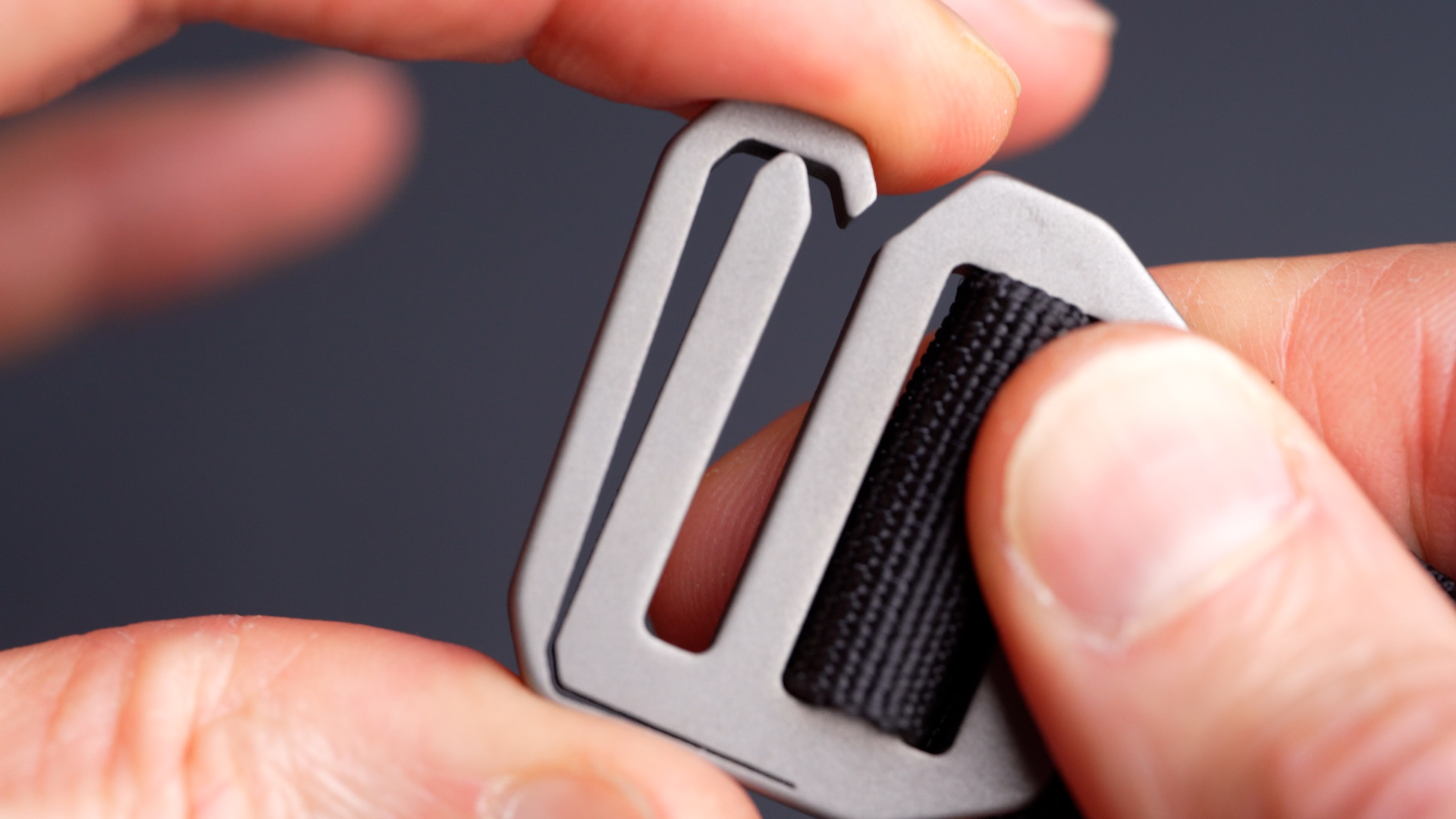
The ‘living hinge’ principle takes that property and turns it into function. Instead of building flexibility into a mechanism by adding components — a spring, a pivot, a hinge pin — you engineer it directly into the geometry of a single piece of material. Cut the right pattern of slots into a titanium bar and it will flex where you want it to flex, and lock where you want it to lock. No assembly. No moving parts. The intelligence is in the shape, not the construction.
MacLaine had been thinking about living hinges for years. He’d been thinking about EDM wire cutting for over a decade. And then, one morning, the two ideas found each other.
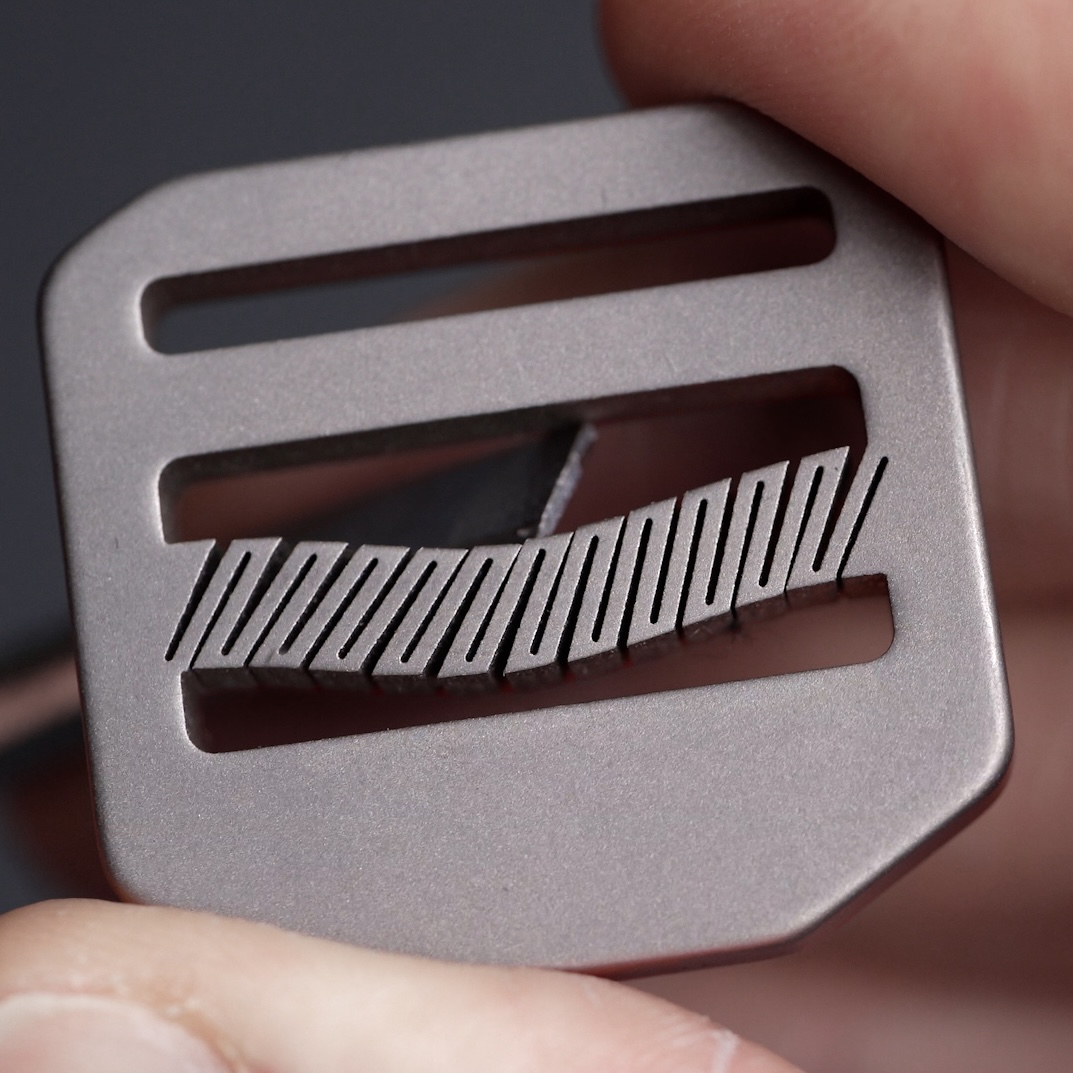
“When I started working on living hinges and the idea of a single piece for functional hardware, the two worlds kind of connected and it was just like — a shower thought — that’s it, that’s how you do it!”
Then came the work. The geometry problem — how many slots, how wide, how much deflection. The 3D printer running overnight. The Taguchi matrices reducing 42 test prints to 8. The FMEA thinking applied to hardware that had never been stress-tested this way before. “The concept was proven quite quickly because there are examples of flexible titanium used for its flexible properties out in the world already. It was more a question of how do you apply it to this application — it’s all about the geometry and then the details.”
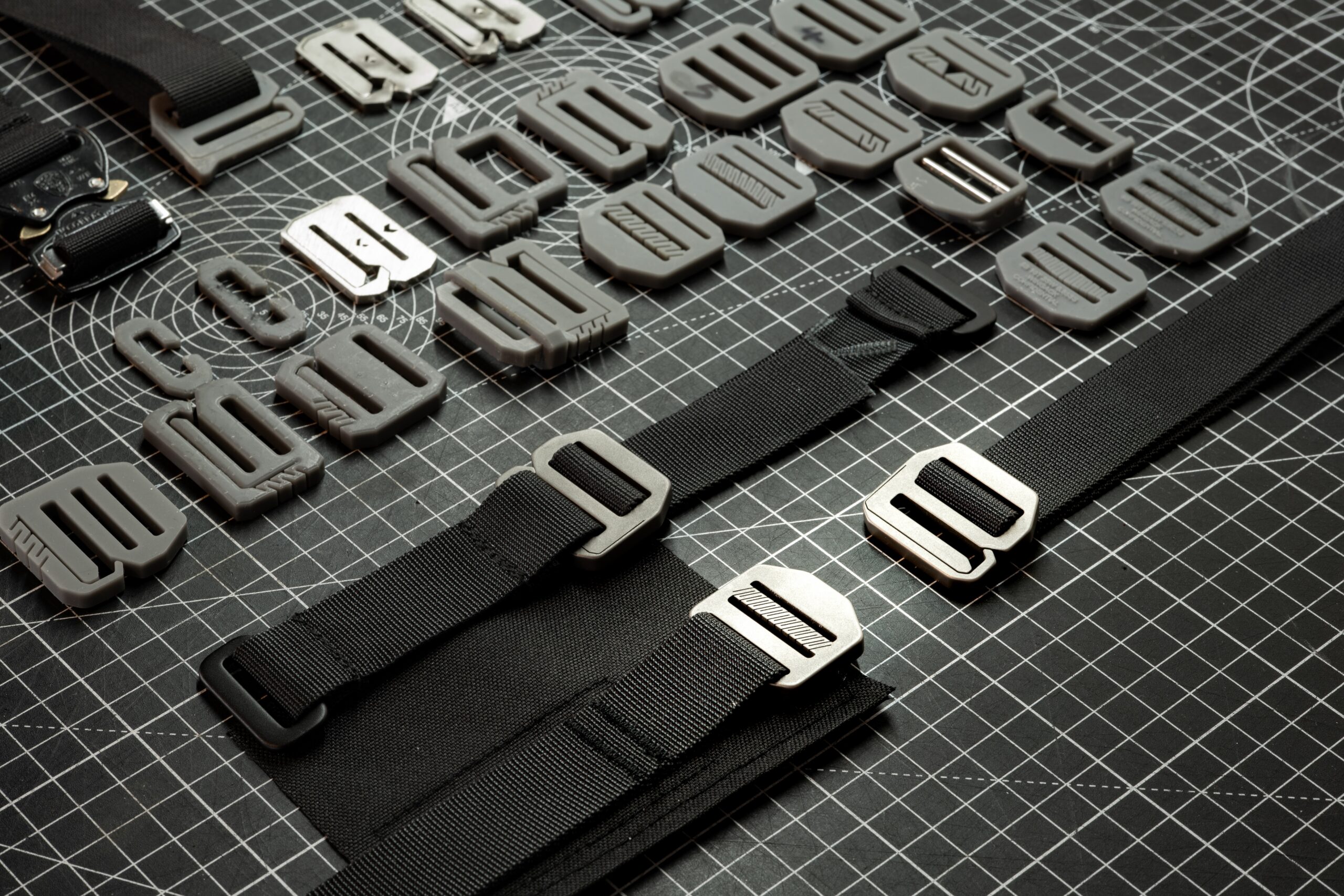
The result is SOLIDSTATE™: a closure mechanism with no springs, no moving parts, no assembly. Each component EDM wire-cut from a single solid block of titanium. And the self-locking behaviour under load — the functional breakthrough at the heart of it — is the exact opposite of how plastic hardware fails. “Under more load you apply, the harder it locks itself.” The mechanism works with load rather than against it. It is, as MacLaine puts it, about as simple as it’s possible to get.
The bag as proof
The Everyday Pack V2 is where all of this thinking becomes something you can carry on your back. The product spec — 21L, full clamshell, eleven pockets, floating laptop sleeve, modular sternum strap system — tells you it’s been well thought out.

The interior lining is UltraGrid™ rip-stop reinforced with U-PE yarn rated at fifteen times stronger than steel by weight. “It’s actually the inside that gets most of the wear day-to-day and it’s the linings on a lot of bags that are overlooked because people don’t see it that much. But we’ve actually realised that that’s the one you should pay attention to.”
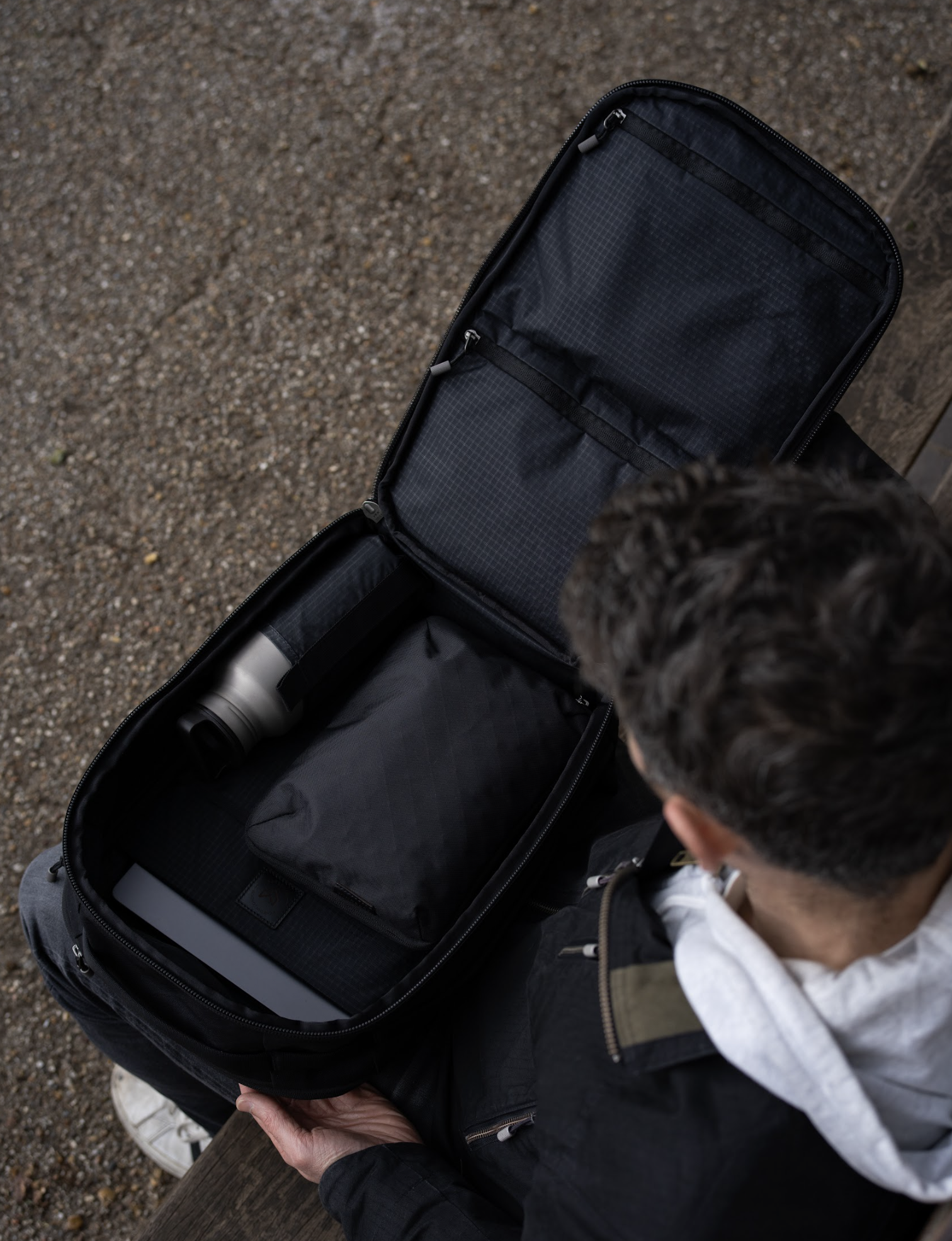
MacLaine admits there was temptation to push the technical spec further — Kevlar webbing, reinforced binding, a more aggressive material story. But he decided against it. “You’re just getting technical for the sake of being technical at that point.”
The lifetime guarantee underpins all of it. “One of the things that we lost as a society from between the late ’70s and now is how to design for longevity.”
Where this goes
Wingback started as a leather goods brand. Then a stationery brand. Now a carry brand — and by the looks of SOLIDSTATE™, potentially a hardware brand too. MacLaine follows the work, and the work keeps leading somewhere genuinely interesting.
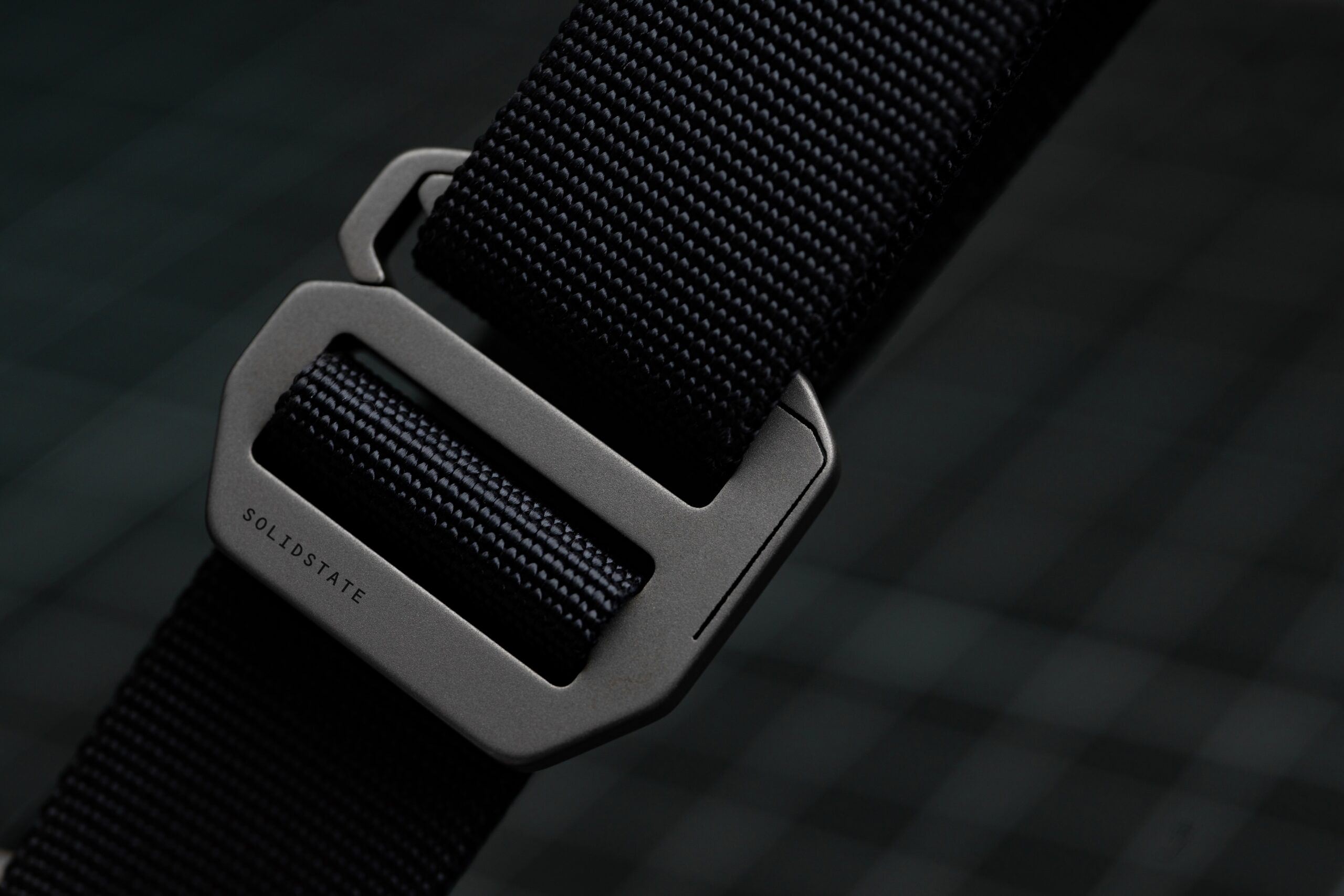
At the end of the call MacLaine ends with: “I want to leave the opportunity open for SOLIDSTATE™ to become its own Fidlock or AustriAlpin alternative.” And we can certainly see the opportunity here, can you?
The Everyday Pack V2 ships October 2026.
SOLIDSTATE™ is just getting started.
