

The village is installing a barrier this summer.
A small village church in northern Italy went viral on social media, prompting residents to seek restrictions on tourist access to ease pressure on local infrastructure.
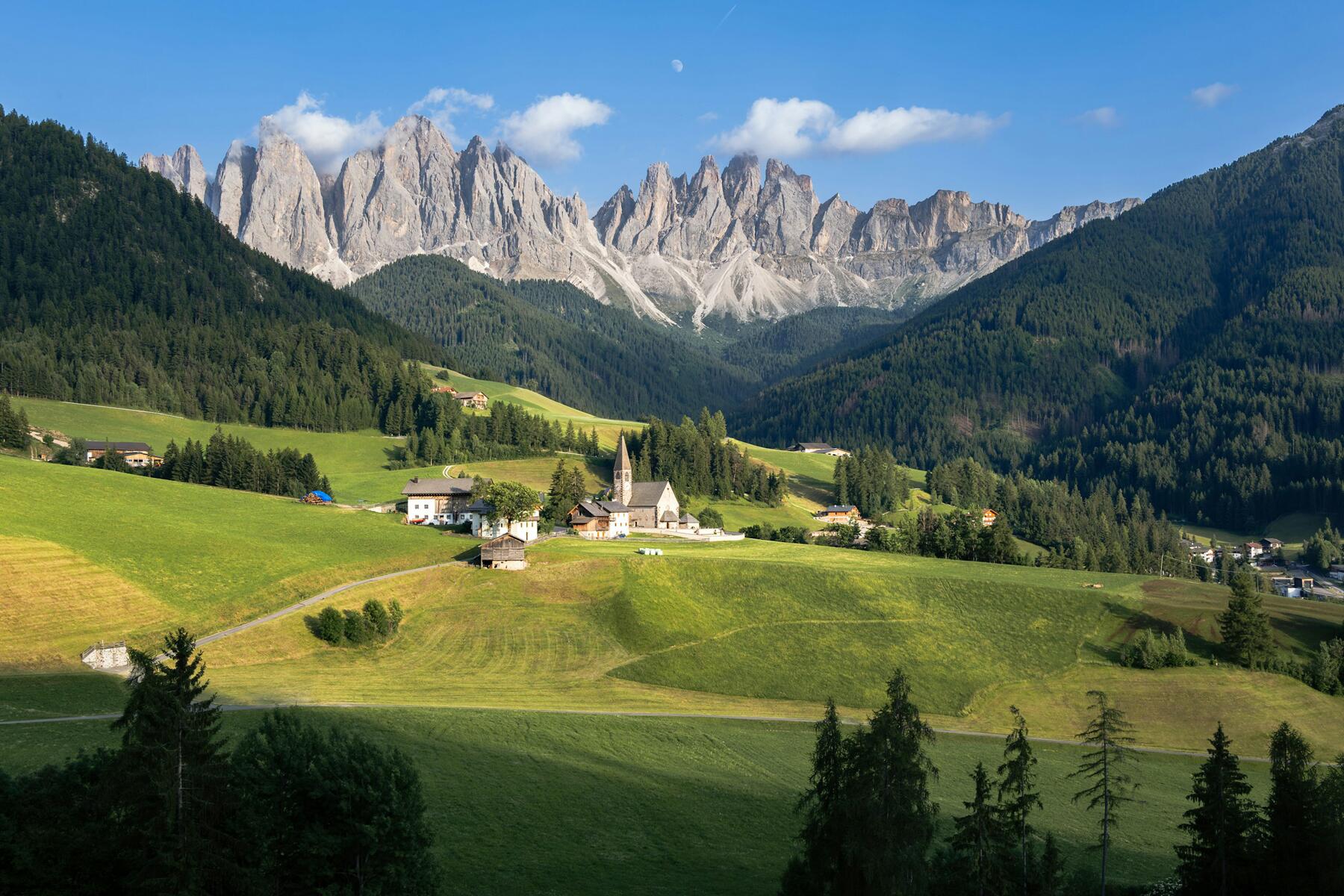
The village of Val di Funes sits in a picturesque setting, with the jagged Odle Peaks surrounding its green valleys. The Santa Maddalena church, once a stop for backpackers hiking in the Dolomites, has become a familiar image on social media. On busy days, as many as 600 people arrive to photograph the church; for context, the village has only 2,500 residents. The influx has led to traffic jams on narrow village roads, and villagers have complained about tourists trespassing on private land.
The village is planning new measures to handle the wave of daytrippers.
Starting May 1, only residents and those staying at least one night will be allowed to access the village. A barrier will manage entry, and all tourist buses and cars will be turned away. The church will remain open to visitors, but they will need to walk 30 minutes from designated parking areas. On days when those lots fill up, drivers must park farther away. Parking fees will rise from €4 ($4.70) to an undisclosed amount, aimed at discouraging quick visits for selfies.
Peter Pernthaler, mayor of the Funes district, told CNN that “overtourism” is not the right word to describe the situation. “I’m not even saying that tourists are a nuisance. But a lot of them come, and we have to manage them. For the residents’ peace of mind and also to ensure a positive experience for the tourists themselves.”
Continue Reading Article After Our Video
Recommended Fodor’s Video
The church gained attention when it appeared on Chinese SIM cards in 2005. In 2013, Apple used the Seceda mountain as a wallpaper, sparking more interest in the region. The mayor said the village receives both types of tourists—those who stay for days and those who take a quick photo and leave.
He also clarified that a barrier already exists. However, the plan is to move it to the center of the village, where the church is located, so tourists have to arrive on foot rather than by car. “We need order, both for those who live here and for those who want to arrive, take the classic photo, and leave.”
Another Italian landmark is also dealing with overwhelming tourist numbers. Rome’s Trevi Fountain began charging tourists €2 this month. Visitors who want to get close and throw coins into the fountain now need a ticket from 9 a.m. to 10 p.m. on weekends and from 11 a.m. to 10 p.m. Monday through Friday. However, some are defying the new rules and throwing coins from above, according to CNN. The ticketing system aims to help local authorities manage the crowds—on peak days, around 70,000 people come to admire the 18th-century fountain.
Last year, the Dolomites faced a similar issue with crowds along a popular trail. Locals installed turnstiles and began charging a €5 fee, a move unauthorized by the government.
Related: Italian Farmers Are Charging Tourists to Walk TikTok-Famous Trail
Elsewhere in Europe, other towns are feeling the pressure of growing tourist numbers and are using different strategies to raise awareness or deter bad behavior. A few years ago, the Austrian town of Hallstatt—famous for inspiring the Disney movie Frozen—installed a fence to stop tourists from photographing a scenic viewpoint. The fence was later taken down but attracted international attention.
