

I’m not going to sugarcoat it: with the war in the Middle East, and the recent violence in Mexico, the world is a scary place right now. So if the idea of travel raises your blood pressure, cancel your trip. A vacation, by its very definition, should be carefree. If that’s not possible for you right now, skip the travel.
But for those who are on the fence, there are a number of reasons why staying the course with a Mexican vacation that’s already booked, or booking a new one, makes sense.
The Safety Situation in Mexico Currently
As you likely remember, the February 22 killing of cartel leader Nemesio Oseguera (known as “El Mencho”) sparked a wave of violence across Mexico. As gang members torched busses and businesses, tourists were warned to shelter in place, and many flights were cancelled, stranding hundreds of visitors.
In the end, some 62 people lost their lives, though it’s important to note that none of the fatalities were tourists. Most of the dead were police officers and gang members.
We now also know that fake, AI-generated videos were circulated by the cartels to stoke fear, and make the chaos and destruction look worse than it was in many areas.
The state of Jalisco, and specifically Puerto Vallarta, saw some of the ugliest violence.
But other areas were peaceful in February, and remain peaceful today. I spoke with Laura Bly, a USA Today travel reporter for 20 years who retired to San Miguel de Allende a decade ago, to get the perspective of a long-time resident on the recent troubles.
“Things here [in San Miguel de Allende] were very calm,” she told me. “The mayor suggested people stay at home [on February 22], and not travel on the highways outside of town. So the local mall closed, and the next day, schools were closed by the state of Guanajuato. But it was all precautionary. I mean this happened on a Sunday and by Monday, the mariachis (musicians) were back in the jardin (garden). Things were back to normal here within 24 hours—less than 24 hours.”
She went on to note that Puerto Vallarta went from “shelter in place orders and closing the airports to having 95% of their their flight operations back to normal in less than 2 days.” She has friends who live in that city and have also visited the beach resorts of the state of Guerrero, and have noted that all are quite peaceful right now.
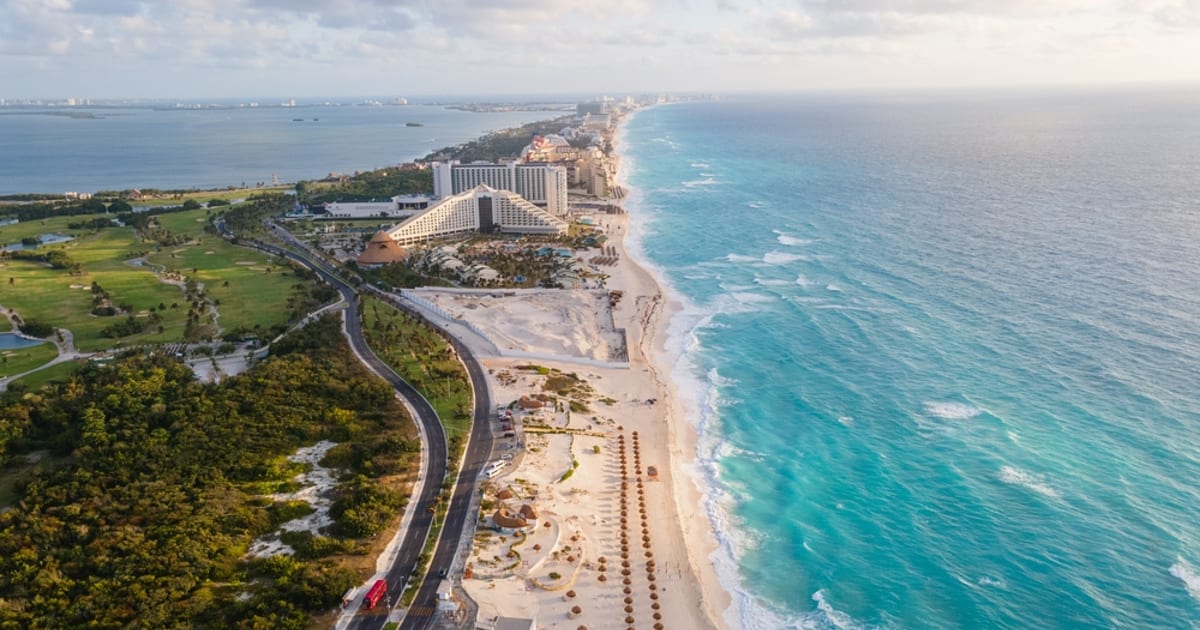
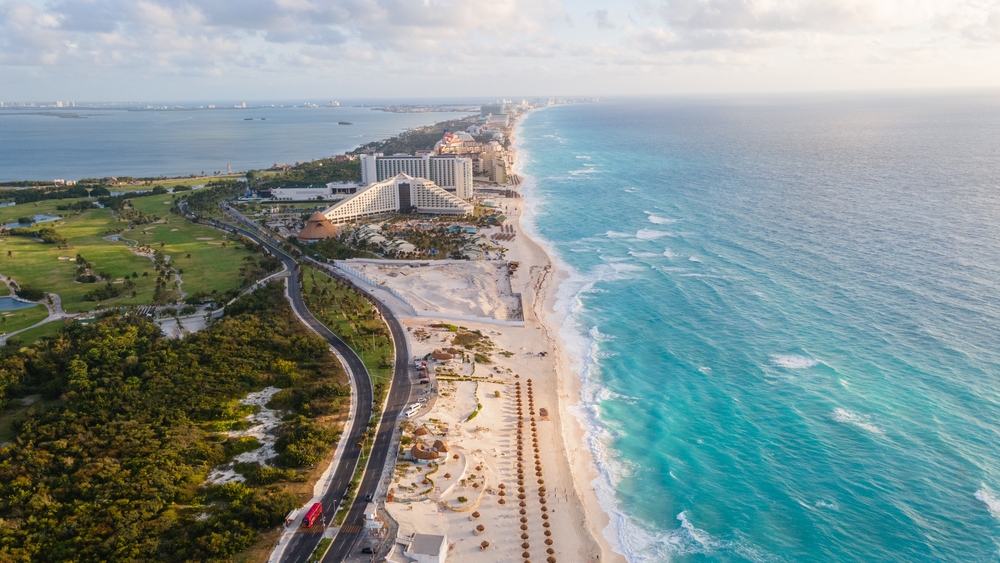
The U.S. State Department is also confirming that things are largely back to normal in Mexico. On Tuesday, it released a new travel advisory for Mexico, which returned most parts of Mexico to the threat levels assigned them before the violence on February 22. The state of Quintana Roo, for example—it’s home to Cancun, Tulum, Playa del Carmen and Cozumel—is once again graded as a 2 out of 4 on the State Department’s safety scale, which means “exercise caution” when visiting, as is the country of Mexico as a whole. That’s the same level of caution urged by the State Department for visits to London and Paris.
For more detail, we have a complete article that parses the State Department’s findings, and looks at which areas of Mexico are generally considered safe, and which are more troubled.
Precautions to Take If You Do Decide to Go To Mexico
The low down is: nobody knows for sure what will happen with the cartels, and their stand off with President Claudia Sheinbaum.
“It’s a fluid situation,” Kevin Coffey, a decorated Los Angeles police officer who is now a well-respected travel safety expert, told me. “Unfortunately [we have to monitor this] day by day.”
Coffey makes a living today advising businesses and business travelers on how to minimize their risk on the road. Here are some of the steps he suggests travelers take before traveling anywhere outside the United States:
- Look at what other governments are telling their citizens. “You can’t just rely on what the United States is saying anymore, as much as I’d like to say we have the best information,” says Coffey. “We have to look at what other countries have to say about our destinations because sometimes [their info] is updated faster, and sometimes they provide different context and more information.” In particular, Coffey recommends looking at the visitor information and advisories created by Canada, the United Kingdom, and Australia.
- Be sure to sign up for the U.S. State Department’s Safe Traveler Program (STEP). Enrollment lets the State Department, and the local consulates, know that you’re in country, and should be reached out to, should problems arise. “It’s not just the website you should go to,” says Coffey. “You need to download the [STEP] app, and you need to monitor it.”
- Make contact with locals before you go, and ask their advice. Bad actors use AI to make situations look more fraught than they are, warns Coffey, pointing to the fraudulent videos that went up during the Mexico violence. So he suggests reaching out to friends-of-friends in the destinations you’re going to to solicit their advice. If that’s not doable, look for people on social media to talk with. “Getting the advice of a local is gold,” he told me.
- Get travel insurance from a company that offers consultations with a security consultant. Some do, some don’t, according to Coffey, and these experts can be very helpful. So before you buy a policy, check to see if they have these types of services for their clients.
Coffey wasn’t comfortable telling me what he personally thought of the safety situation in Mexico. But sometimes actions speak louder than words. During our conversation he let drop that he and his wife will be going to Cabo San Lucas, Mexico in six days.
